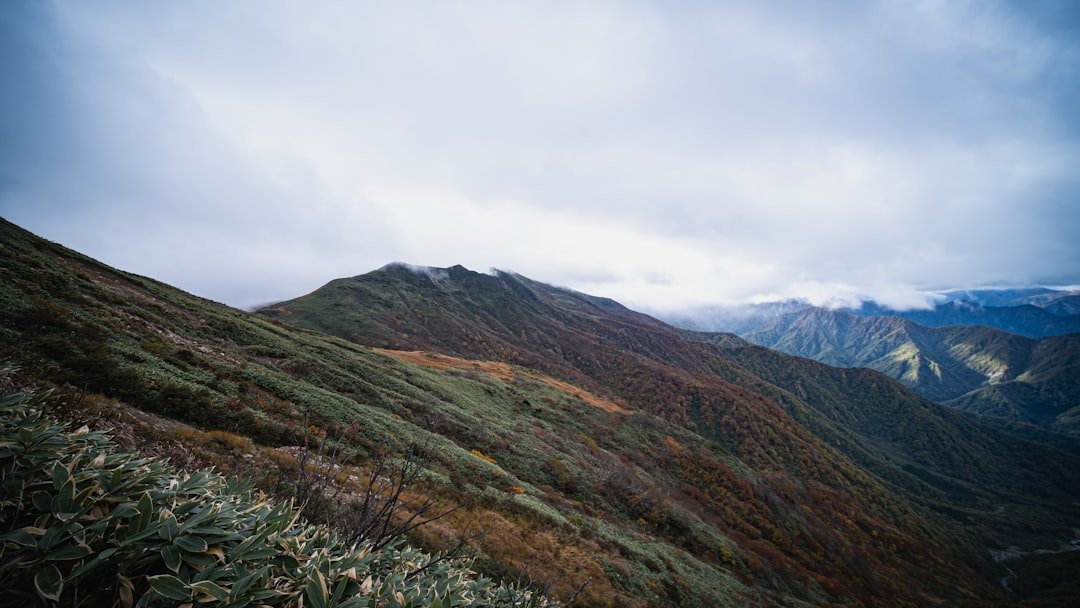
Telephoto Lenses: The Compositional Solution for Complex Landscapes
Landscape photographers often encounter a fundamental challenge: expansive vistas that appear cluttered, visually chaotic, or compositionally unfocused when captured through standard wide-angle optics. The solution lies in an often-underutilized approach—leveraging medium to extended telephoto focal lengths to transform problematic scenes into compelling, purposeful imagery.
The 100-400mm focal range represents a versatile sweet spot in telephoto photography, offering photographers significant creative control over scene selection and compositional framing. Unlike wide-angle lenses that prioritize inclusive field-of-view, telephoto optics function as sophisticated editorial tools, allowing practitioners to isolate meaningful visual elements from surrounding distractions.
The Compression Effect and Visual Decluttering
When working with extended telephoto magnifications, photographers benefit from optical compression—a phenomenon where foreground and background elements appear spatially compressed relative to one another. This characteristic proves invaluable when dealing with landscapes featuring dimensional complexity or excessive compositional noise.
Mountain ranges, for instance, frequently appear dimensionally flat and uninspiring through conventional wide-angle perspectives. This optical flattening occurs because wide lenses exaggerate spatial separation between compositional layers. By contrast, telephoto focal lengths compress these spatial relationships, creating visually engaging depth layering that restores three-dimensional character to distant peaks and ridge formations.
Similarly, the selective framing capabilities of telephoto optics eliminate unwanted foreground elements—abandoned structures, vegetation overgrowth, or atmospheric haze—that typically contaminate landscape compositions. Photographers gain editorial precision, deliberately choosing which environmental components warrant inclusion.
Technical Considerations and Practical Application
The 100-400mm range offers flexibility across diverse landscape scenarios without requiring multiple lens investments. This versatility accommodates both tighter telephoto perspectives and moderately expansive framings, accommodating compositional adjustments without repositioning camera position.
Stability becomes increasingly critical at extended telephoto magnifications. Practitioners should employ robust tripod systems and consider image stabilization technologies—either lens-based optical stabilization or in-body mechanisms—to counteract motion-induced blur. Faster shutter speeds become essential, particularly in lower-light environmental conditions.
Reframing Compositional Strategy
This technical approach fundamentally restructures how photographers engage with landscape visualization. Rather than accepting expansive scenes at face value, practitioners develop heightened observational skills, systematically scanning compositions for isolated visual narratives within broader environments.
The psychological shift proves equally significant. Photographers transition from attempting to encompass entire vistas—a conceptually exhausting pursuit—toward identifying concentrated areas of visual interest. This refined methodology produces intentional, purposefully composed imagery that communicates specific environmental narratives rather than generic landscape documentation.
By adopting telephoto focal lengths as primary compositional instruments, landscape photographers unlock sophisticated visual solutions previously obscured by conventional wide-angle methodologies, ultimately elevating technical execution and creative storytelling potential.