Harnessing the Power of Available Light in Portrait Photography
Creating compelling portrait imagery using natural light sources requires more than simply pointing a camera at your subject. The distinction between an ordinary photograph and a professional-quality image often hinges on subtle adjustments in compositional positioning and subject placement relative to light sources. For photographers working with ambient illumination, developing an intuitive understanding of how to manipulate and direct available light becomes an invaluable skill that transcends equipment limitations.
Many emerging photographers assume that achieving sophisticated lighting control demands an extensive array of specialized equipment. However, the reality proves far more accessible. By developing keen observational skills and understanding fundamental light behavior, you can shape and direct natural illumination without investing in supplementary reflectors, artificial flash units, or other gear-dependent solutions. This knowledge liberates you to work effectively in virtually any environment, from urban settings to remote locations where transporting additional equipment proves impractical.
The Foundation: Understanding Light Behavior and Movement
The cornerstone of effective natural light portraiture rests upon comprehending how light behaves in three-dimensional space. Every adjustment to your subject’s position, your own camera placement, or the angle between light sources and your composition fundamentally transforms the resulting image. Rather than viewing these variables as fixed constraints, progressive photographers recognize them as malleable elements worthy of experimentation and refinement.
Five Strategic Positioning Approaches
Strategic Subject Repositioning: Moving your subject relative to light sources offers perhaps the most straightforward method for controlling illumination character. A simple shift of several feet can transition between front-lit, side-lit, and backlit configurations, each producing distinctly different aesthetic qualities and mood variations.
Camera Angle Optimization: Your shooting angle dramatically influences how light appears to sculpt facial features and form. Shooting from slightly elevated or lowered positions creates dimensional variations in how shadows and highlights interact across your subject’s face and body.
Distance Manipulation: The spatial relationship between subject and light sources affects both light intensity and its directional qualities. Understanding inverse square law principles helps you predict how moving your subject closer or further from windows or outdoor light sources modifies exposure and contrast ratios.
Time-Based Light Quality Changes: Natural light characteristics shift continuously throughout the day. Early morning and late afternoon sessions provide directional, warm-toned illumination with pronounced dimensional qualities, whereas midday presents flatter, more neutral light requiring different compositional strategies.
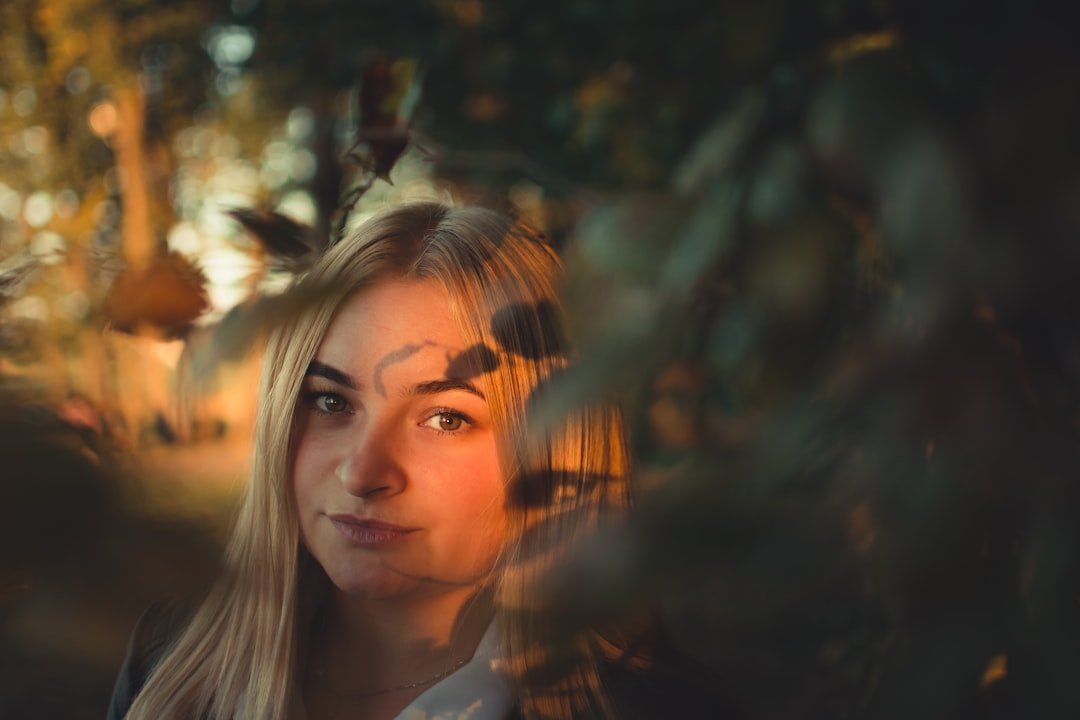
Environmental Obstruction Use: Strategic positioning relative to trees, structures, and architectural elements allows you to filter and soften direct light while maintaining brightness. Semi-shaded locations provide superior control compared to fully exposed environments.
Practical Application and Workflow Integration
Implementing these positioning strategies requires developing observational discipline during shooting sessions. Rather than settling for initial compositions, dedicate time to systematically exploring how incremental positioning changes influence your subject’s appearance. This investigative approach builds intuitive understanding that translates across diverse shooting scenarios and lighting conditions.
Professional photographers recognize that technical proficiency with camera settings becomes secondary to mastery of light manipulation fundamentals. By prioritizing positional exploration over equipment acquisition, you develop portable expertise applicable in virtually limitless contexts, establishing foundations for sophisticated imagery regardless of available resources.