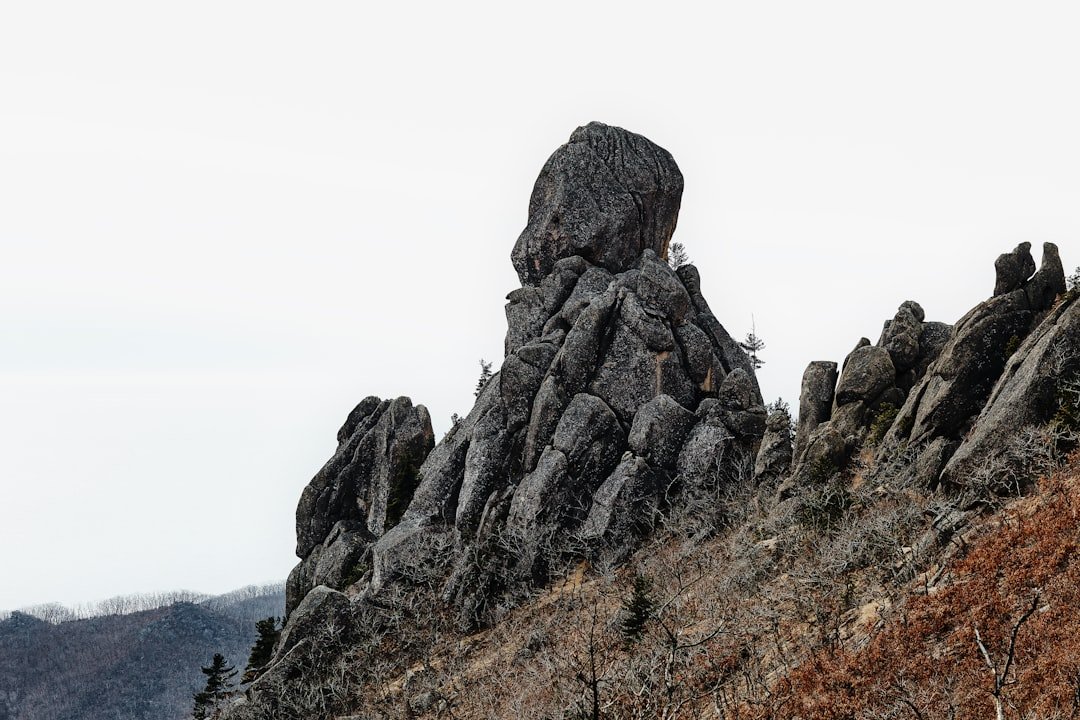
Achieving Complete Depth of Field in Expansive Scenes
Landscape photographers frequently encounter a persistent technical challenge: rendering every element in a composition with equal optical sharpness. While conventional wisdom suggests that stopping down to apertures like f/11 or f/16 should solve this problem, the reality proves more nuanced. Even at these narrow aperture settings, maintaining critical focus across the entire scene—from minute foreground details to distant mountain peaks—remains elusive.
The culprit lies in the fundamental limitations of depth of field. No matter how tightly you close your aperture, the plane of focus remains a thin slice through your composition. Everything before and beyond this zone inevitably softens, creating an aesthetic that undermines otherwise compelling imagery. A blurred foreground, in particular, draws the viewer’s eye away from your intended narrative and diminishes the overall impact of your work.
Understanding the Focus Stacking Methodology
Focus stacking represents an elegant solution to this optical dilemma. This advanced post-processing technique involves capturing multiple exposures of identical scenes while progressively shifting your point of focus. Rather than attempting to achieve complete sharpness in a single frame, you systematically photograph the landscape multiple times—first focusing on nearby elements, then intermediate distances, and finally distant subjects.
During the capturing phase, maintain consistent camera positioning using a sturdy tripod and identical exposure parameters across all frames. Only the autofocus point should shift between captures. This methodical approach creates a comprehensive set of images, each delivering optimal sharpness in specific depth zones.
The Post-Processing Integration
Once you’ve assembled your library of focused frames, specialized software—whether Adobe Photoshop, Helicon Focus, or Affinity Photo—analyzes the collection and intelligently blends them together. The algorithms identify the sharpest portions of each image and seamlessly combine them into a unified composition where foreground textures, middle-ground elements, and background vistas all maintain crystalline clarity.
This workflow empowers photographers to transcend the optical constraints that previously forced difficult compromise decisions. You gain the freedom to employ wider apertures when artistically beneficial, while still achieving the omnipresent sharpness that defines impactful landscape work.
Practical Application and Best Practices
Success with focus stacking demands attention to several critical considerations. Environmental stability matters significantly—wind-induced camera movement between captures will compromise registration during blending. Use mirror lockup or electronic shutters to minimize vibration-induced errors. Additionally, changing light conditions can introduce exposure inconsistencies that complicate the merging process.
The technique proves particularly valuable when photographing intricate foregrounds—wildflower meadows, rock formations, or water features—where partial focus simply cannot do justice to your compositional vision. Professional landscape photographers increasingly incorporate focus stacking into their standard workflows, recognizing it as essential rather than exotic.