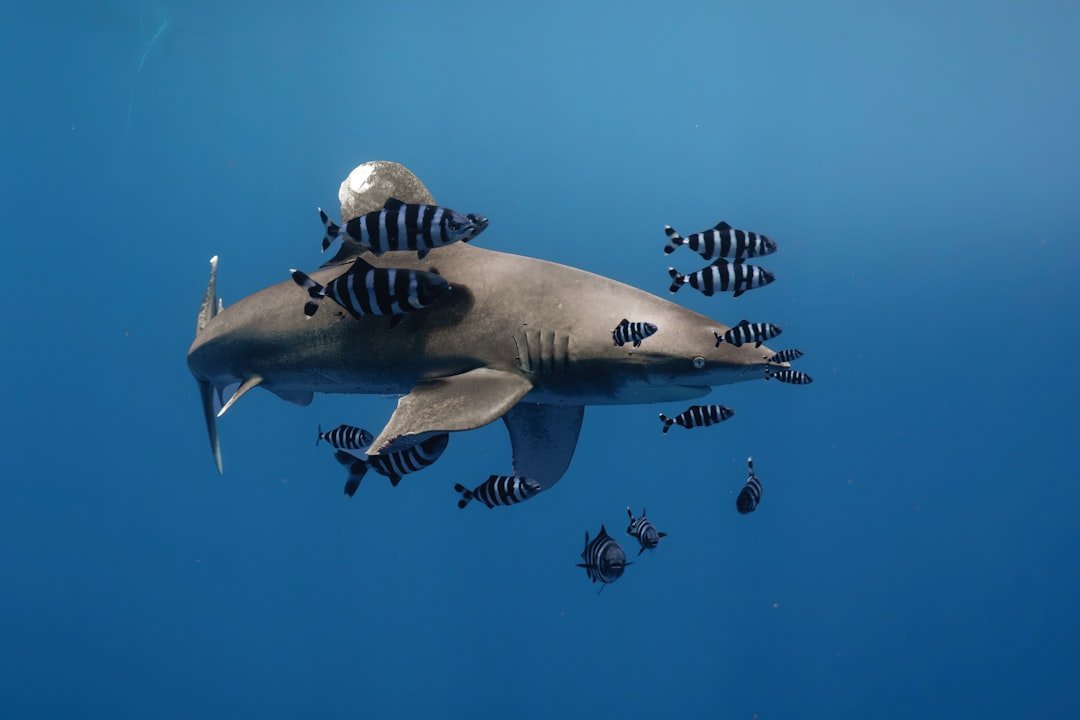
Capturing the Ocean’s Perspective: A First-Person View from Within
Wildlife cinematographer and adventure photographer Ari Rabin-Havt has long harbored an ambitious creative vision—to document an unprecedented perspective that few humans have ever witnessed and lived to share. His quest centered on achieving an intimate optical documentation from within the oral cavity of a hammerhead shark, framing the external seascape through this apex predator’s vantage point.
This audacious photographic endeavor represents a convergence of technical precision, marine biology expertise, and calculated risk-taking that exemplifies modern underwater documentation practices. The pursuit of such unconventional compositional angles pushes the boundaries of conventional wildlife photography, where photographers typically maintain safe distances and utilize telephoto optics to capture their subjects.
The Challenge of Intimate Underwater Positioning
Executing photography from within a shark’s mouth presents extraordinary logistical complexities. Traditional underwater camera housings, lighting systems, and stabilization equipment must function flawlessly in an environment of extreme proximity to a powerful marine animal. The technical specifications of the camera apparatus required specialized engineering considerations—from pressure ratings to rapid autofocus capabilities that could compensate for unpredictable subject movement.
Rabin-Havt’s approach demonstrates the evolution of adventure photography in the digital era, where photographers increasingly seek immersive perspectives rather than conventional documentation. The methodology bridges wildlife photography with experiential storytelling, creating imagery that conveys the sensory experience of being present within the subject’s world.
Marine Conservation Through Visual Narrative
Beyond the technical achievement, this photographic project contributes to broader conversations about shark behavior and perception. By reframing how audiences visually encounter these creatures, such intimate documentation can influence conservation attitudes. Sharks, frequently misrepresented through sensationalized media, benefit from contextual visual representation that humanizes them within their ecosystem.
The resulting imagery serves as both technical showcase and educational content—demonstrating that these predators possess remarkable biological sophistication and occupy essential ecological niches. This narrative approach aligns with contemporary wildlife photography trends emphasizing storytelling and environmental consciousness alongside aesthetic excellence.
Expanding the Boundaries of Possible Perspectives
Rabin-Havt’s accomplishment exemplifies how contemporary photographers continually redefine what constitutes feasible documentation. With advances in compact camera technology, enhanced underwater housing capabilities, and innovative mounting solutions, photographers can now pursue perspectives previously relegated to theoretical discussion.
The success of such ventures encourages other practitioners to conceptualize new approaches to familiar subjects. Whether through drone technology, specialized submersibles, or direct-proximity positioning, the photography industry increasingly embraces unconventional angles that generate fresh visual dialogue about our natural world.
This singular photograph encapsulates the intersection of personal artistic ambition, technical mastery, and environmental storytelling—hallmarks of exceptional contemporary wildlife photography.