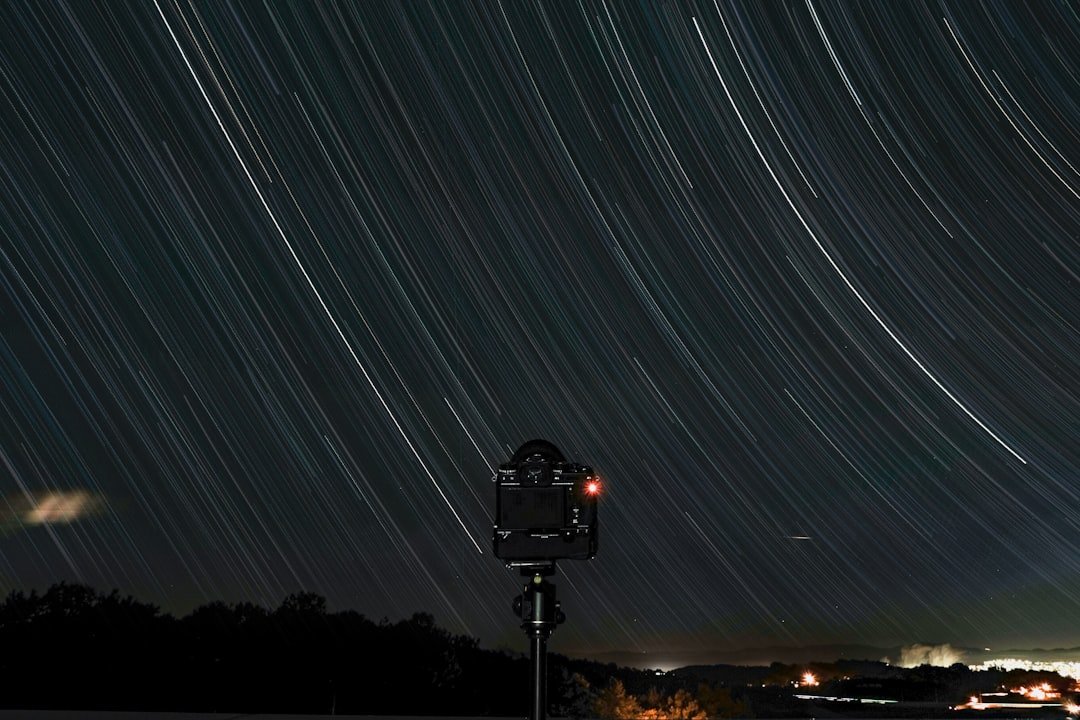
When Space Infrastructure Becomes a Celestial Photography Challenge
The commercial spaceflight sector has achieved a remarkable engineering milestone this week, with SpaceX deploying its ten-thousandth satellite constellation unit into low-Earth orbit. This unprecedented accumulation of orbital infrastructure represents both a triumph of technological advancement and an emerging concern for astronomical observation and night-sky imaging professionals worldwide.
The sheer volume of these spacecraft traversing Earth’s upper atmosphere creates a visual phenomenon that has become increasingly difficult to ignore—particularly for astrophotographers, landscape photographers, and observatories seeking to capture pristine celestial imagery. Each satellite reflects sunlight during twilight hours and early evening observations, producing distinctive bright streaks across long-exposure photographs and time-lapse sequences.
Visualizing the Invisible: A Photographer’s Mission
Renowned imaging specialist Joshua Rozells has undertaken an important documentary project to illustrate the real-world consequences of this orbital expansion. Through his lens, Rozells demonstrates precisely how these artificial objects manifest in the night sky, making tangible what remains largely abstract to the general public. His work serves as a crucial visual bridge between the engineering accomplishment in Silicon Valley and the practical implications for stargazers and professional photographers.
For the photography community, this situation presents a unique technical challenge. Astrophotographers employing wide-angle lenses and extended exposure times now frequently capture unwanted satellite trails—bright linear artifacts that compromise image composition and scientific data collection. Where once a pristine starfield could be reliably documented, contemporary night-sky work increasingly requires post-processing intervention to remove these interference patterns.
The Broader Implications for Night-Sky Imaging
The proliferation of mega-constellations raises important questions about the future of optical astronomy and dark-sky preservation. Major observatories have begun implementing specialized filters and computational mitigation strategies, while amateur astronomers worldwide grapple with diminishing opportunities to capture unobstructed celestial views.
This situation underscores a critical intersection between technological progress and environmental stewardship. As commercial interests continue expanding orbital infrastructure, photographers and scientists must develop innovative approaches to maintain their work’s integrity. Some professionals now incorporate satellite prediction software into their pre-shoot planning, strategically scheduling sessions during windows when orbital traffic patterns are least congested.
Rozells’ documentation efforts contribute meaningfully to public discourse surrounding space sustainability. By rendering visible what typically escapes notice—unless you’re specifically observing the night sky—his imagery catalyzes conversations among policymakers, engineers, and creative professionals about responsible orbital expansion.
The photography industry’s response to this challenge demonstrates both resilience and adaptability. Equipment manufacturers are developing specialized filters, software developers are creating tracking applications, and photographers are refining techniques to work within these new atmospheric constraints. Yet the fundamental question remains: as humanity increasingly utilizes Earth’s orbital envelope, what role should preservation of the natural night-sky environment play in our priorities?