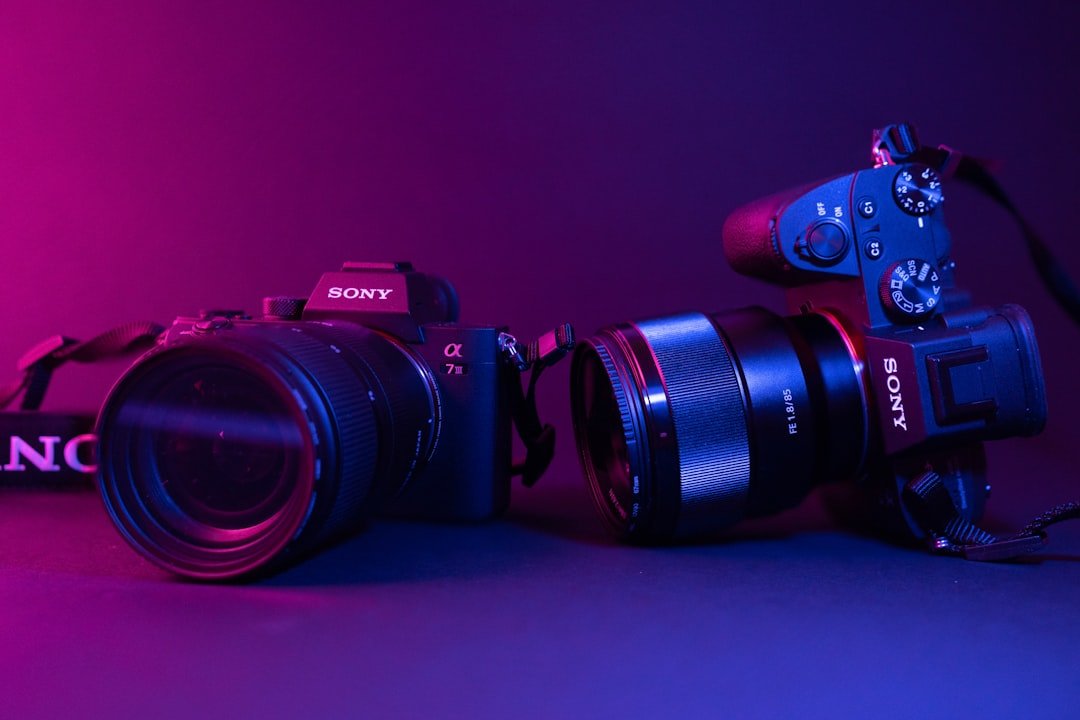
Two Flagship Cameras, Two Different Purposes
The arrival of Sony’s latest high-resolution mirrorless powerhouse has sparked considerable debate within the photography community. With its revolutionary stacked sensor architecture and impressive continuous shooting capabilities reaching 30 frames per second, many enthusiasts have begun questioning whether the newly released model renders its flagship sibling—the a1 II—obsolete. During Sony’s recent product reveal in Manhattan, this particular inquiry surfaced repeatedly among attending photographers and industry professionals.
However, the reality proves far more nuanced than a straightforward comparison suggests. While both cameras occupy Sony’s premium segment and share certain technological foundations, they were engineered to serve distinctly different photographic disciplines and user requirements.
Understanding the Technological Distinctions
The a7R VI represents Sony’s commitment to the resolution-focused market segment, prioritizing megapixel count and pixel-level detail capture. Its innovative sensor design delivers exceptional speed without compromising the substantial resolution that landscape photographers, commercial studios, and fine-art practitioners demand. The enhanced burst performance enables professionals in these fields to maintain their preferred shooting methodology while gaining additional operational flexibility.
The a1 II, conversely, targets content creators and sports photographers who require a more balanced approach. This model emphasizes versatility across multiple genres, delivering respectable resolution paired with comprehensive autofocus sophistication and feature richness tailored for dynamic shooting scenarios. The a1 II’s engineering prioritizes real-world performance across diverse conditions rather than pursuing maximum resolution specifications.
The Resolution vs. Versatility Equation
Photography has never been a one-size-fits-all discipline. Professional nature photographers working with panoramic compositions or those requiring maximum print dimensions will continue finding the resolution-centric approach invaluable. The substantial pixel count accommodates aggressive cropping, substantial enlargements, and demanding post-processing workflows without quality degradation.
Meanwhile, professionals capturing fast-action events, editorial assignments, or hybrid photo-video projects benefit from the a1 II’s comprehensive performance metrics across broader operational contexts. Its autofocus algorithms, video capabilities, and overall responsiveness create a different value proposition entirely.
Market Reality and Professional Workflow
The competitive dynamics between these two cameras shouldn’t be viewed through binary lens replacement thinking. Instead, they represent Sony’s strategic positioning across complementary professional segments. High-volume production studios often maintain multiple camera bodies anyway, and equipment selection remains fundamentally tied to project requirements rather than newest-release timing.
Photographers investing substantially in either system make deliberate choices based on concrete professional needs. A landscape or architectural specialist operates within entirely different parameters than a motorsports or wildlife photojournalist. Their equipment investments reflect these operational realities rather than specifications-sheet comparisons.
The Broader Perspective
Rather than rendering existing equipment obsolete, technological advancement in professional imaging typically expands creative possibilities and operational efficiency for specific user categories. The newest announcement doesn’t invalidate the a1 II’s carefully considered engineering approach; it simply offers alternative solutions for photographers with distinct priorities.
This iterative development cycle strengthens the overall ecosystem, ensuring that professionals across multiple specializations find appropriate tools matching their unique requirements. Understanding these distinctions helps photographers make informed purchasing decisions aligned with genuine professional needs rather than pursuing specifications in isolation.