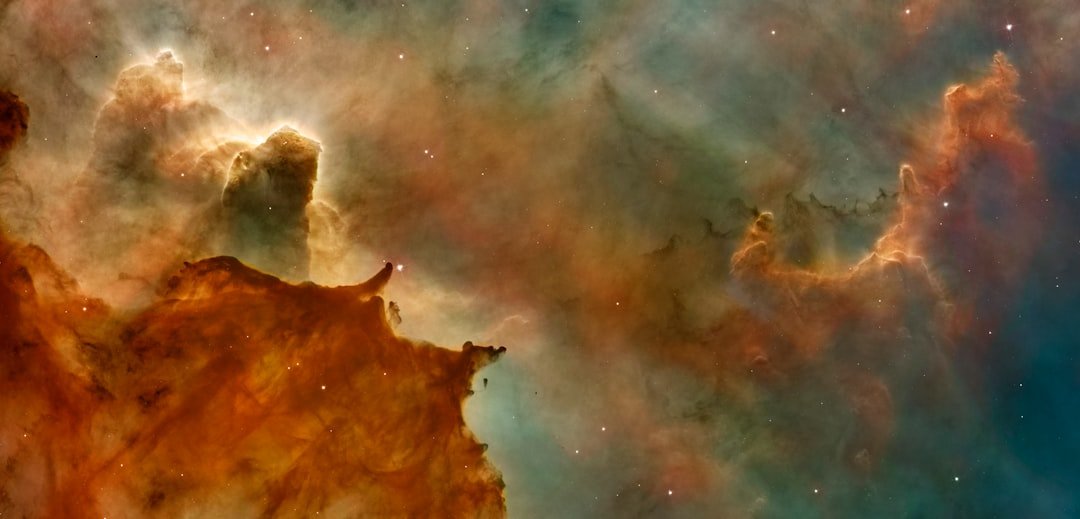
Astrophotographer’s Stellar Work Showcased on NASA’s Premier Platform
The space imaging community is celebrating a major milestone this week, as NASA selected an outstanding deep-sky photograph for its internationally recognized Astronomy Picture of the Day feature. On July 20, 2026, the agency’s daily astronomical showcase presented a breathtaking capture of the Liberty Nebula, a luminous stellar nursery situated approximately 9,000 light-years from Earth. The striking image originated from the lens and vision of accomplished astrophotographer Logan Carpenter, whose technical prowess and artistic sensibility earned him a place among the select few whose work graces NASA’s prestigious platform.
For those unfamiliar with NASA’s APOD initiative, the program represents one of astronomy’s most influential educational resources. Since its inception, the daily feature has garnered an international following, serving as a vital bridge between cutting-edge astronomical research and the general public. Having one’s work featured on APOD carries considerable prestige within the astrophotography community, representing both technical excellence and compelling visual storytelling.
Understanding the Liberty Nebula
The Statue of Liberty Nebula derives its evocative name from its distinctive silhouette, which bears a remarkable resemblance to the iconic American monument. This celestial star-forming region represents an active zone of stellar genesis, where gravitational forces continue sculpting vast clouds of gas and dust into newborn stars. The nebula’s glowing appearance results from energetic radiation emitted by young, massive stars within the region, which ionizes surrounding hydrogen gas and produces that characteristic reddish luminescence visible in quality astronomical imagery.
Capturing such distant deep-sky objects requires specialized equipment, exceptional technical knowledge, and patience that extends across multiple observation sessions. Astrophotographers must master the intricacies of long-exposure imaging, precise telescope alignment, and image processing techniques that reveal details invisible to the naked eye. Carpenter’s successful documentation of this distant stellar nursery demonstrates mastery across all these demanding disciplines.
The Significance of Professional Recognition
NASA’s selection process for APOD remains notably rigorous and selective. The agency receives countless submissions annually from amateur and professional astrophotographers worldwide, yet only one image earns the distinction each day. This selectivity underscores the exceptional quality that Carpenter’s Liberty Nebula image achieved in both technical execution and aesthetic composition.
For astrophotographers pursuing their passion at any level—whether as professionals or dedicated hobbyists—such recognition validates the countless hours invested in refining equipment setups, learning image processing workflows, and perfecting observational techniques. Carpenter’s achievement serves as inspiration for the broader imaging community, demonstrating that exceptional results remain attainable through dedication and continuous skill development.
The Broader Context
The prominence given to this particular image reflects growing public interest in astronomical photography and deep-space imaging. As imaging technology becomes increasingly accessible and processing software grows more sophisticated, more talented individuals than ever before can pursue serious astrophotography. NASA’s APOD platform plays an essential role in celebrating these achievements while simultaneously educating viewers about the cosmos’s remarkable structures and dynamics.
Carpenter’s featured work reminds us that the universe continues revealing its majesty to those equipped with suitable tools and sufficient determination. The Liberty Nebula, shining across nine millennia of cosmic distance, has finally found an eloquent visual ambassador in the form of this compelling astronomical portrait.