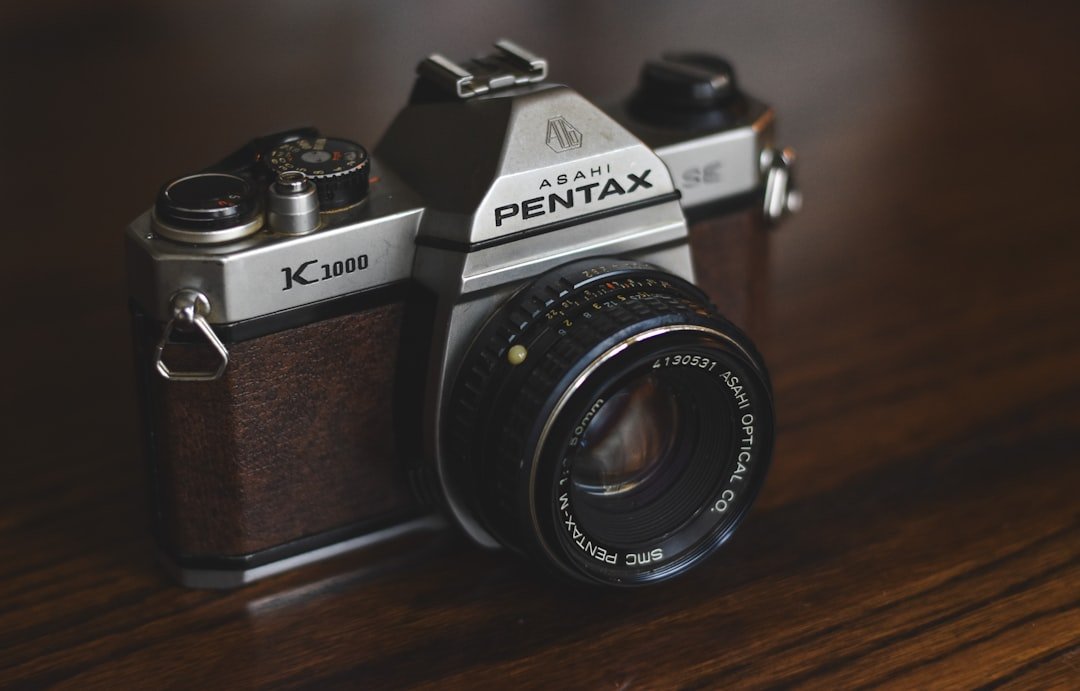
A Half-Century of Photographic Purity
When photographers discuss foundational film cameras, one name consistently emerges as the definitive teaching tool: the Pentax K1000. Since its introduction, this mechanical marvel has instructed countless individuals in the fundamental principles of image capture, earning its place as perhaps the most recognized educational camera in photographic history. Yet as we approach 2026, a critical reassessment is warranted—one that repositions this celebrated instrument from “entry-level” equipment to a brilliantly conceived example of purposeful design.
The Philosophy of Intentional Restraint
The K1000’s genius lies not in what it offers, but in what it deliberately omits. This camera executes precisely three core functions: governing exposure through shutter velocity, controlling light through aperture adjustment, and achieving critical focus. Nothing more. Nothing less. In contemporary photography, where manufacturers routinely introduce byzantine menu systems and countless operational parameters, the K1000’s restraint reads as almost radical.
This minimalist approach represents a conscious philosophical choice rather than a limitation imposed by technological constraints. During an era when manufacturers continue accelerating “feature accumulation”—adding functionalities that rarely see practical application—the K1000 demonstrates that optical excellence doesn’t require computational complexity.
Mechanical Excellence as Professional Asset
Contemporary professionals increasingly recognize that operational simplicity cultivates technical mastery. When a photographer manipulates only essential variables, cognitive resources concentrate entirely on compositional choices and light interpretation. The K1000 enforces this disciplined workflow through its very architecture.
The camera’s mechanical construction—devoid of electronic dependencies—guarantees reliability under demanding conditions where contemporary digital or automated systems might falter. No battery management concerns, no firmware updates, no sensor calibration requirements. This mechanical honesty appeals equally to seasoned professionals seeking a dependency-free backup system and purists committed to analog methodology.
Reassessing Legacy Equipment
The traditional “beginner camera” designation fundamentally mischaracterizes the K1000’s capabilities and design intention. Labeling it entry-level suggests graduated obsolescence—that photographers should eventually transcend to “superior” instruments. This interpretation overlooks the camera’s sophisticated engineering and its demonstrated capacity to produce exhibition-quality results across professional applications.
Numerous working photographers maintain K1000 bodies within their operational arsenals specifically because of their operational transparency. The camera functions as an invaluable pedagogical instrument not merely for newcomers, but for established professionals seeking to reinforce foundational principles or work without technological mediation.
Relevance in the Modern Photography Landscape
The contemporary renaissance of film photography has catalyzed renewed appreciation for mechanically straightforward systems. As digital photographers confront menu fatigue and interface complexity, the K1000’s elegant simplicity represents liberation rather than deprivation. The camera demands that operators engage fundamentally with exposure mechanics—precisely the knowledge base that distinguishes thoughtful image-makers from button-pushers.
The K1000 occupies a unique position in photographic culture: simultaneously accessible to absolute beginners and genuinely useful to accomplished practitioners. Its five-decade longevity testifies not to nostalgia, but to validated functionality and timeless design principles that transcend generational preferences.
Conclusion: Recalibrating Our Perspective
As we progress deeper into the twenty-first century, the Pentax K1000 deserves recognition as more than historical curiosity or training apparatus. It represents a masterful distillation of photographic essentials—proof that professional-grade image-making requires no bewildering complexity. In an era plagued by technological excess, the K1000’s three-dial methodology stands as a compelling counterargument to feature proliferation, validating the enduring power of purposeful restraint.