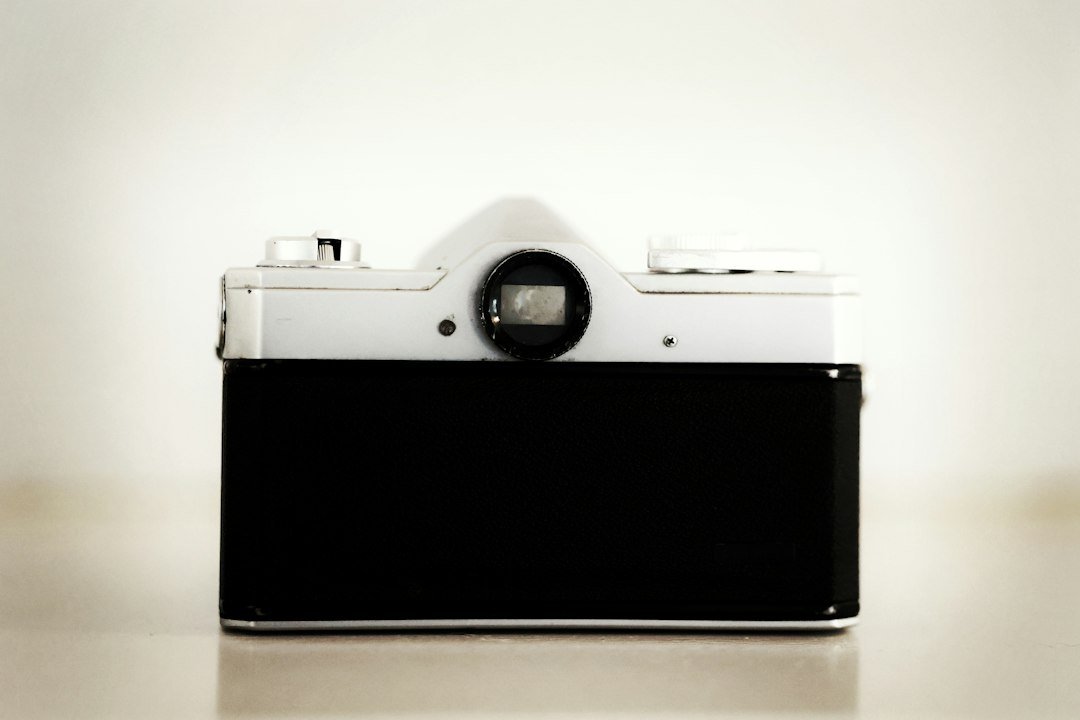
A Playful Take on Camera Design with Limited Practical Value
Godox’s entry into camera manufacturing with the C100 represents an unconventional approach to imaging devices that prioritizes experimentation over conventional performance. This pocket-sized unit defies traditional camera architecture, presenting photographers with an intriguing proposition that ultimately reveals itself better suited to a different purpose than everyday shooting.
Understanding the Godox C100’s Unconventional Form Factor
The C100 distinguishes itself through radical minimalism. Rather than employing a traditional optical or electronic viewfinder, Godox opted for a transparent screen that functions primarily as a compositional guide rather than a true viewing mechanism. This display presents framing overlays and mode indicators through its see-through design, supporting multiple aspect ratios including 16:9, 4:3, 3:2, and 1:1 formats.
The interface consists of a streamlined control scheme: a central shutter button, directional navigation keys for adjusting settings, and a mode selector switch. This deliberate simplification makes the device immediately intuitive, requiring minimal learning curve for basic operation. The minimalist aesthetic extends throughout the white rectangular chassis, reinforcing the device’s emphasis on simplicity over feature complexity.
The Transparent Viewfinder Challenge
While conceptually intriguing, the transparent viewfinder presents significant practical limitations. Composition accuracy depends heavily on viewing distance and angle, creating inconsistent framing results. This lack of standardization leads to unpredictable image cropping—a particularly problematic limitation for photographers accustomed to precise compositional control.
Beyond framing uncertainty, the transparent screen creates visual confusion. Users experience persistent focus conflicts as their eyes struggle between concentrating on the subject matter beyond the viewfinder and the camera interface itself. This cognitive friction produces eye strain during extended shooting sessions, undermining the device’s usability for serious photographic work.
Image Quality: Below Consumer Standards
Godox has withheld technical specifications including sensor dimensions, aperture values, and ISO ranges. The resulting output—approximately 2-megapixel images—demonstrates characteristics typical of toy cameras. While initial expectations suggested worse performance, distinct technical limitations become apparent during analysis.
The most problematic aspect involves severely limited dynamic range. The sensor exhibits pronounced highlight clipping, aggressively favoring shadow detail at the expense of tonal separation in bright areas. This creates a characteristic “blown-out” appearance in high-contrast scenarios. Additionally, fixed-focus optics necessitate significant subject distance for adequate sharpness, restricting close-focusing versatility.
Performance varies by lighting conditions. Daylight scenarios with moving subjects produce surprisingly acceptable results, indicating reasonable shutter speed selection. Conversely, low-light performance deteriorates significantly, producing grainy, muddy imagery—an unsurprising limitation given the diminutive sensor architecture.
The Light Meter Mode: Where Innovation Shines
Paradoxically, the C100’s most valuable function emerges through its integrated light meter capability. This dedicated mode displays ISO, aperture, and shutter speed recommendations, transforming the device into a practical exposure measurement tool. This functionality demonstrates unexpected utility for photographers requiring quick exposure calculations without carrying dedicated meters.
Final Verdict
The Godox C100 occupies an unusual market position. As a traditional imaging device, it disappoints through inferior image quality and cumbersome operational workflows. However, its light meter functionality provides genuine utility for specific professional applications. Prospective buyers should evaluate this device primarily as a specialized tool rather than a conventional camera system.