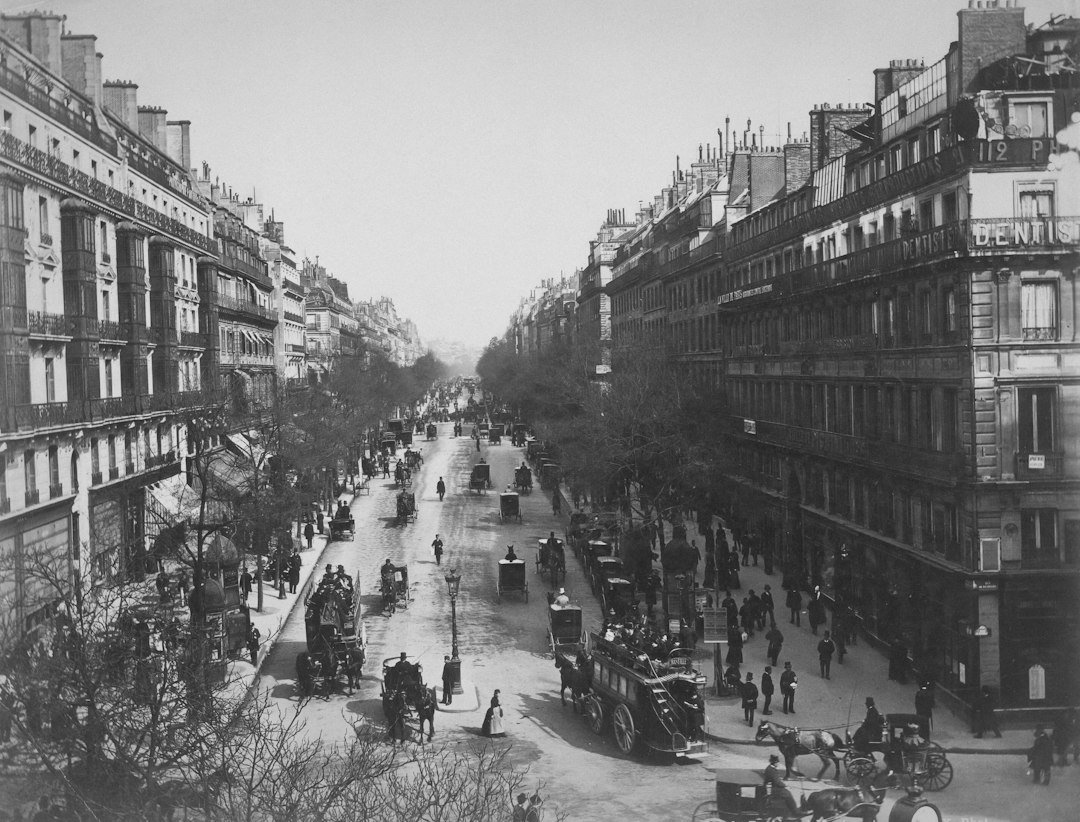
Groundbreaking Discovery: Pinpointing History’s First Human Portrait in a Photograph
In a significant development for photography historians and archivists, scholars have successfully identified the precise geographic location depicted in one of the medium’s most pivotal images. Louis Daguerre’s 1838 composition titled View of the Boulevard du Temple represents a watershed moment in the history of visual documentation—it stands as the earliest known photographic image to successfully render human subjects within its frame.
This achievement carries profound implications for both the photography community and historical documentation more broadly. The daguerreotype process, revolutionary for its era, demanded extended exposure times that typically rendered moving subjects as invisible or severely blurred apparitions. The fact that Daguerre managed to capture discernible human figures in this particular exposure speaks to both technical mastery and fortunate circumstance regarding the movement of pedestrians within the scene.
Understanding the Technical Achievement
The daguerreotype represented the pinnacle of early photographic technology, utilizing polished silver-coated copper plates combined with iodine vapors to create light-sensitive surfaces. Exposure durations often stretched across many minutes, making the successful documentation of human presence exceptionally challenging. Daguerre’s accomplishment demonstrated not merely technical proficiency but also an intuitive understanding of composition and timing that would define photographic practice for generations to come.
The identification of this specific Parisian location allows researchers and enthusiasts to understand the urban context of this transformative moment. The Boulevard du Temple, a notable thoroughfare in Paris during the nineteenth century, served as a bustling commercial and residential artery. The architectural elements, street layout, and urban character visible in this historic plate now provide tangible connection between the image and its real-world geography.
Implications for Photography History
This cartographic precision enriches our comprehension of early photography’s development and the cultural circumstances surrounding its emergence. Rather than existing as merely abstract historical artifact, Daguerre’s groundbreaking work now anchors itself within verifiable geographic and temporal coordinates. Scholars can now contextualize the image within the broader narrative of Parisian life, urban development, and the early public reception of photographic technology.
The successful documentation of human subjects—even if barely perceptible to contemporary viewers—fundamentally altered expectations regarding what photography could accomplish. Prior to this 1838 image, prevailing skepticism questioned whether the medium possessed sufficient sensitivity and speed to capture living subjects. Daguerre’s achievement dispelled these doubts and opened conceptual pathways for portrait photography, which would subsequently become the primary commercial application of photographic processes throughout the mid-nineteenth century.
A Milestone Worth Remembering
For contemporary photographers and imaging professionals, this discovery reinforces appreciation for our medium’s remarkable origins. The technical limitations that Daguerre navigated—requiring minutes-long exposures and complex chemical processing—make his achievement particularly noteworthy when juxtaposed against modern digital imaging capabilities. Understanding this foundational work enriches perspective on how far photographic technology has advanced while honoring the ingenuity of those pioneers who established the fundamental principles governing our craft.