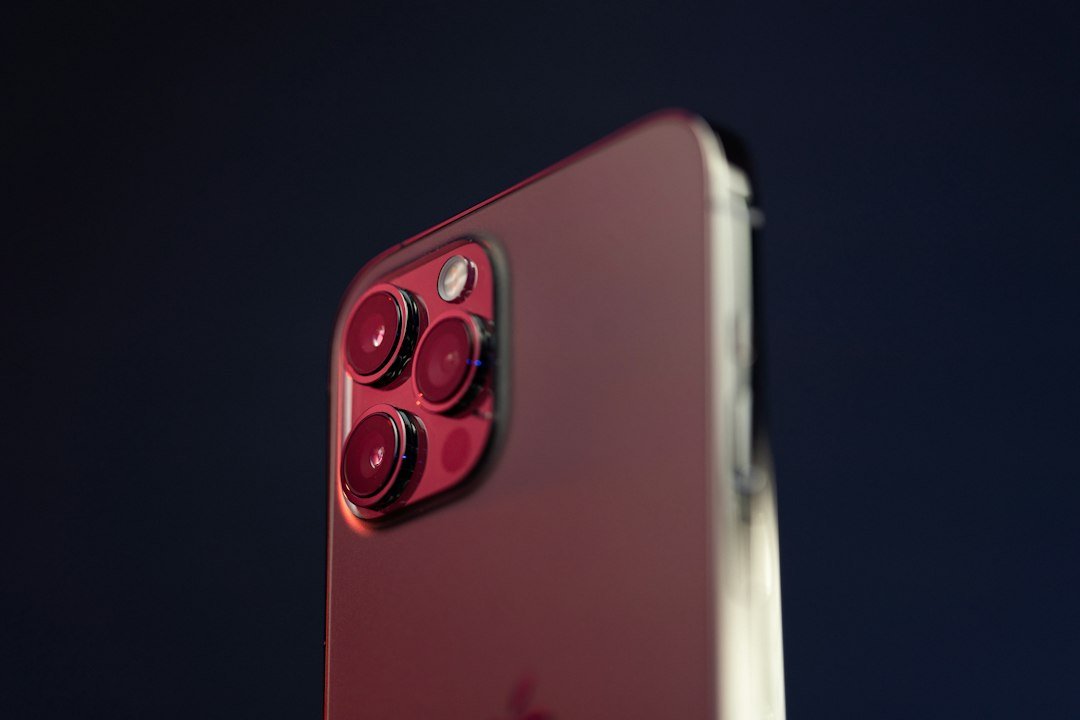
Jon McCormack, the Apple vice president who guided the iPhone’s Camera and Photos software for more than eight years, retired at the end of October, according to Bloomberg’s Mark Gurman. Apple has not announced a successor. Instead, his former deputies have stepped into his responsibilities, and the camera and photos software teams now report to Sebastien Marineau-Mes, the executive who leads AI integration across Apple’s operating systems.
A Career Built on Image Quality
McCormack joined Apple in 2018 and brought a serious photographic background to the company. His influence reached well beyond the Camera app. He also oversaw the image-processing pipeline working quietly underneath it, the computational layer that handles much of the heavy lifting in modern smartphone photography. Bloomberg credits him with the redesigned front camera on the iPhone 17.
His tenure also covered the iPhone 18 Pro, which introduced the device’s first variable aperture. That model also added long-requested manual controls for aperture, shutter speed, and white balance, giving enthusiasts a level of creative command that iPhone users had asked for for years.
A Firm Stance Against Generative Editing
Perhaps more significant than any single spec was McCormack’s philosophy. Bloomberg’s sources describe him as a determined critic of using generative AI to create or alter photographs. Speaking with Wired, he argued that a photograph should depict something that genuinely occurred, a view that set him apart even as Apple rolled out its own generative editing tools. That approach also distinguished Apple from rivals Google and Samsung, both of which have embraced generative AI editing more openly.
The philosophy is visible in hardware as well. The iPhone 18 Pro introduced Apple Reference Image, a capture mode that cryptographically signs sensor data so that a picture can later be verified as authentic. For photographers and newsrooms concerned about manipulated imagery, that feature addresses a growing industry problem directly.
Where Apple’s AI Ambitions Meet Its Cameras
Bloomberg’s sources insist the retirement was not triggered by a dispute over Apple’s AI strategy. Still, the timing draws attention. Apple’s AI push is increasingly intertwined with its camera system. iOS 27 added a Siri mode to the Camera app, and generative tools such as Extend now sit alongside Clean Up in the Photos app.
McCormack has addressed this tension publicly. In a June conversation with YouTuber Tyler Stalman, he maintained that these features still preserve the integrity of the moment. Bloomberg notes, however, that his views had been increasingly at odds with the company’s broader direction on artificial intelligence.
What Comes Next for iPhone Photographers
In the short term, little should change for everyday users. The iPhone 18 Pro is already on shipping schedules, and McCormack’s former deputies remain in their roles. The more important question is longer term: will Apple maintain a clear boundary between capturing a real moment and generating one? With the executive most closely associated with that principle now gone, photographers and industry observers will be watching closely to see whether that line holds.