Generative Expand Arrives on Mobile and Desktop, Enhancing Lightroom’s Creative Capabilities
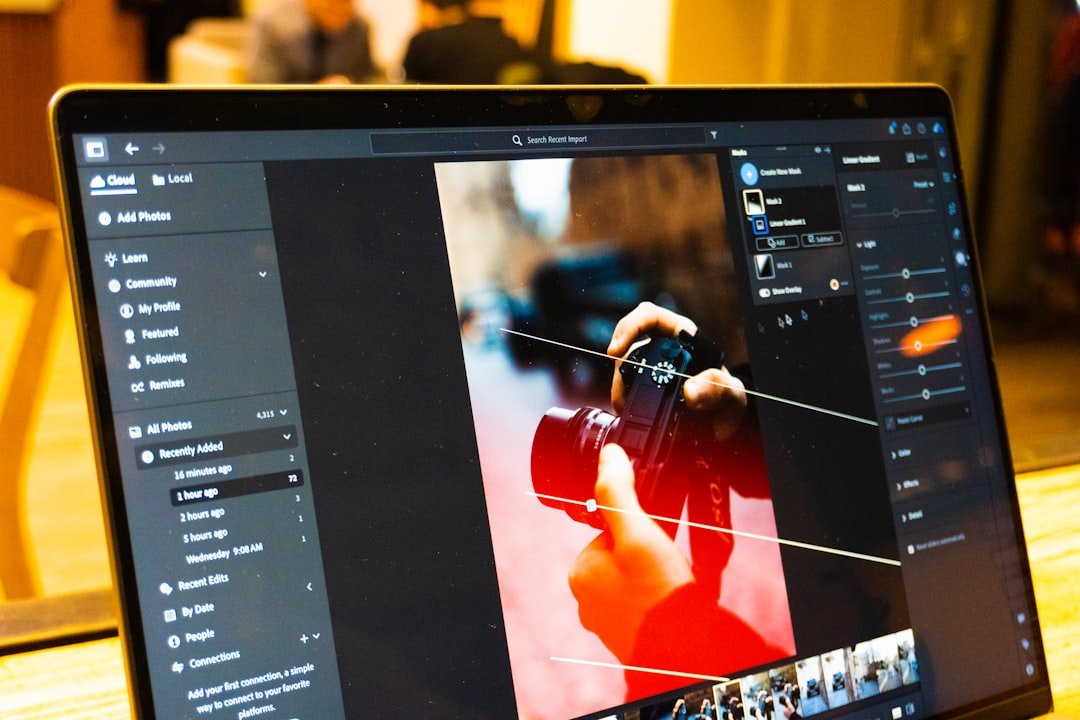
Adobe’s August release cycle brings significant enhancements to its photography workflow ecosystem, rolling out new versions of Lightroom Classic (15.5), Lightroom Desktop (9.5), and Lightroom Mobile (11.5). These updates introduce powerful artificial intelligence features and refined editing controls that empower photographers to accomplish sophisticated post-processing tasks without switching between applications.
The most notable addition is Generative Expand, now available on both Lightroom Desktop and Mobile platforms. This AI-driven tool, initially introduced in Photoshop during mid-2023, intelligently extends photographs beyond their original boundaries. Whether photographers need to accommodate new aspect ratios or recover space lost during perspective corrections, Generative Expand seamlessly fills expanded areas with contextually appropriate content. Unfortunately, Lightroom Classic users will need to wait for future updates to access this feature.
Streamlining Complex Workflows with Render to DNG
Both Classic and Desktop versions introduce a Render to DNG function accessible through the context menu. This command generates a new DNG file containing all applied edits, functioning similarly to a compressed TIFF format. Photographers should understand that this approach differs from non-destructive editing—the original sensor’s highlight and shadow information becomes inaccessible after rendering.
Despite this limitation, the feature proves invaluable for generative-based workflows and consolidating intricate editing layers. Consider a practical scenario: photographers can refine their crop composition, render that iteration as a new DNG, then employ Generative Expand to enlarge the frame around this refined composition—all within Lightroom, eliminating the necessity for Photoshop integration.
Advanced Masking Controls and Catalog Protection
Both Classic and Desktop gain Feather and Edge adjustment sliders for AI-generated masks. These new controls grant photographers unprecedented precision when working with Subject, Background, and Object selections, allowing meticulous refinement of transition gradients and edge accuracy.
Classic also introduces an important stability feature: automatic catalog repair functionality. This safeguard detects and corrects corruption within the AI data storage component upon startup—a crucial addition for professionals maintaining catalogs on synchronized cloud drives or executing intensive tethered shooting sessions.
Mobile Platforms Get Professional-Grade Tools
Lightroom Mobile’s expansion truly elevates smartphone and tablet capabilities. Beyond Generative Expand, iOS users gain access to AI Denoise, significantly improving image quality when shooting at elevated ISO sensitivities. The Animate feature, which transforms static images into brief video sequences, now leverages Google’s Veo 3.1 Lite model, delivering faster processing and superior efficiency.
Both iOS and Android implementations benefit from enhanced mask compatibility, ensuring edits created on desktop versions transfer reliably to mobile devices. A new natural-language search function accelerates image discovery through intuitive text-based queries. Android users specifically receive a justified gallery grid and collapsible segment organization, while both platforms gain expanded camera and lens profile libraries.
Incremental But Meaningful Enhancements
Classic receives refinements including adjustable opacity for cropped-out areas during composition work. Adobe has simultaneously expanded lens compatibility for GoPro, Laowa, and Sigma optics, improved Canon tethering reliability through updated PTP protocols, and deployed numerous interface and performance optimizations.
While individually modest, these cumulative improvements significantly benefit professionals managing extensive image libraries or operating established studio workflows. The August updates demonstrate Adobe’s commitment to keeping Lightroom competitive as photographers increasingly demand artificial intelligence integration without abandoning the application ecosystem they depend upon daily.