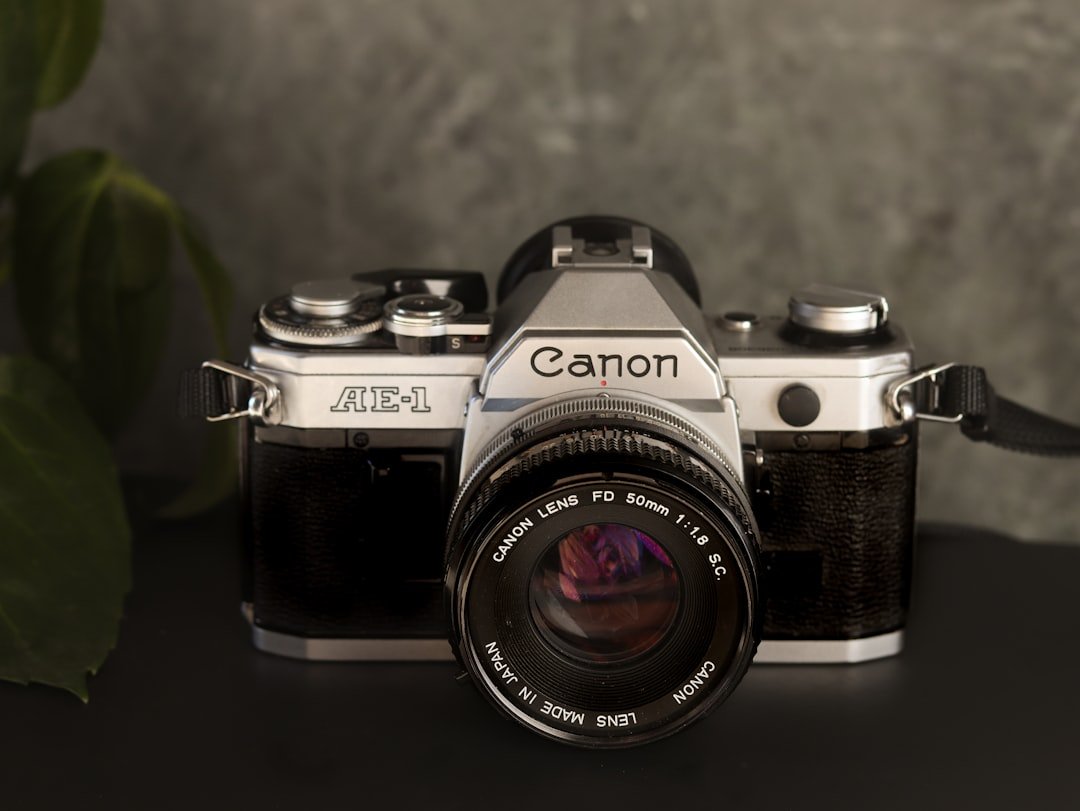
When a Japanese Manufacturer Changed Photography Forever
During the mid-1970s, professional and advanced amateur photography remained largely the domain of dedicated enthusiasts willing to master complex mechanical systems and darkroom techniques. This landscape shifted dramatically when Canon introduced the AE-1, a revolutionary 35mm single-lens reflex camera that fundamentally altered how the general public perceived the medium.
In 1977, an unprecedented marketing strategy unfolded across American television networks. Canon invested substantial resources in prime-time commercial spots to promote their latest camera model—a bold move that distinguished them from competitors who typically relied on trade publications and specialty retailers to reach their audience. Rather than emphasizing optical superiority or mechanical precision, these advertisements focused on a radical concept: accessibility.
The Accessibility Revolution
What made the AE-1 genuinely transformative was its approach to automatic exposure metering. While earlier automatic cameras existed, the AE-1 combined user-friendly automation with professional-grade versatility in a package that didn’t intimidate newcomers. The camera featured an electronically controlled shutter that prioritized aperture settings selected by the photographer, eliminating tedious manual exposure calculations that previously required extensive knowledge and experience.
This technological advancement democratized 35mm SLR photography in ways previous innovations had not achieved. Manufacturing engineers at Canon had successfully engineered a system that bridged the gap between fully automatic point-and-shoot simplicity and manual control preferred by technical photographers. The result appealed to a dramatically expanded consumer base.
Marketing Innovation Meets Consumer Demand
The television advertising campaign proved remarkably effective because it addressed consumer psychology rather than technical specifications. Rather than discussing shutter speed ranges or viewfinder brightness, advertisements emphasized how ordinary people could capture meaningful photographs without becoming engineers or chemists. This messaging resonated with households where photography remained an occasional interest rather than a consuming passion.
The commercial strategy coincided with broader cultural shifts. Home entertainment was becoming increasingly visual, photographic documentation of family moments held greater cultural significance, and consumer electronics were becoming more intuitive. Canon recognized this convergence and positioned the AE-1 as the camera for everyone—not just professionals or hobbyists with specialized knowledge.
Industry Transformation and Legacy
The AE-1’s introduction and its unconventional marketing approach triggered a significant transformation throughout the camera industry. Competitors scrambled to develop their own automated exposure systems and subsequently invested in consumer-focused advertising. Photography participation rates increased substantially during the subsequent decade, establishing patterns that would influence the medium’s trajectory through the film era and beyond.
The camera itself proved remarkably reliable and durable, with hundreds of thousands of units produced. Many remain functional today, now appreciated by contemporary photographers exploring analog imaging. The AE-1 represented a pivotal moment when photography transitioned from specialized technical pursuit to mainstream recreational activity.
By removing technical barriers and promoting the camera through mass-media channels, Canon didn’t merely introduce a product—they fundamentally expanded the constituency of photographers worldwide. The AE-1 demonstrated that innovation in consumer electronics succeeds not only through technical advancement but equally through understanding and addressing consumer psychology and cultural readiness.