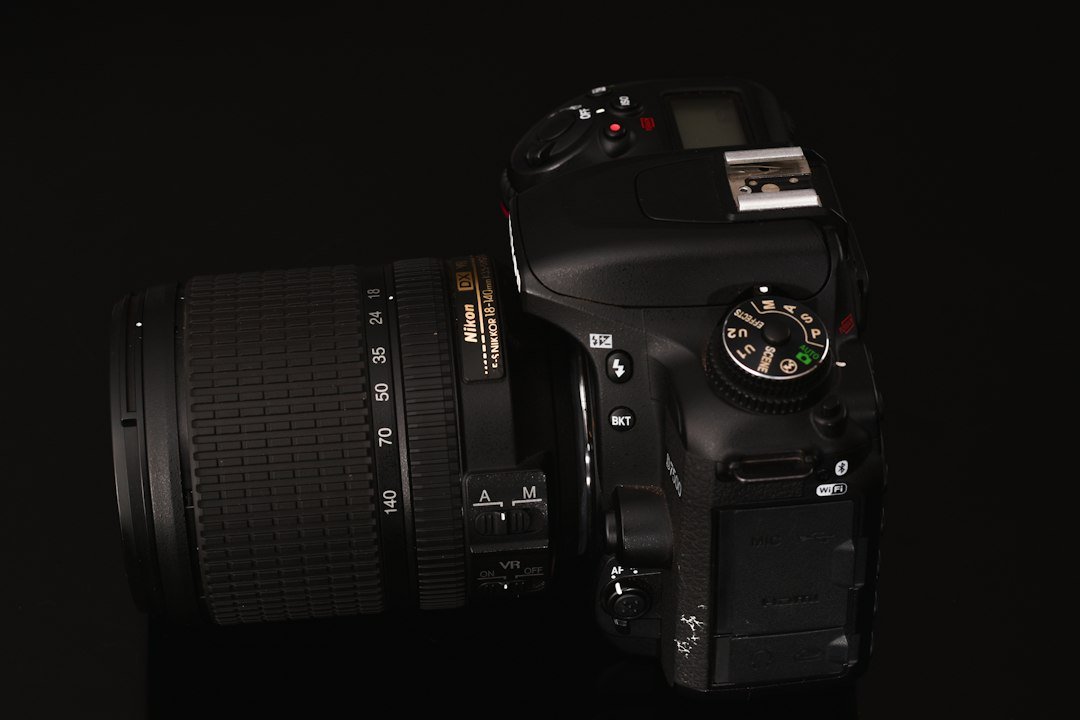
Two Powerhouses Battle for Budget Full-Frame Supremacy
The full-frame mirrorless camera market has become increasingly competitive at the entry level, with manufacturers racing to deliver professional-grade capabilities at accessible price points. Canon and Nikon have positioned their latest offerings—the EOS R8 II and Z5 II respectively—as gateway devices for photographers ready to invest in premium imaging technology without breaking the bank.
Priced within a stone’s throw of each other, with the Canon retailing at $1,899 and the Nikon at $1,850 for body-only configurations, these cameras represent genuinely competitive alternatives. Both manufacturers have addressed previous market feedback, with Canon adding autofocus joystick functionality and in-body stabilization to its second-generation model, narrowing the traditional performance gaps between these two platforms.
Specification Snapshot: More Similar Than Different
At first glance, the technical foundations prove remarkably parallel. Each camera deploys a 24-megapixel full-frame sensor with sophisticated in-body image stabilization delivering 7.5 stops of correction when paired with compatible optics. Both feature AF joysticks and articulated rear screens—essential tools for modern production workflows spanning stills and video work.
The divergence emerges in the details. Canon’s EOS R8 II delivers superior burst capabilities, capable of 40 frames per second via electronic shutter while maintaining Raw file recording. Its lighter chassis (546g versus 700g) appeals to photographers prioritizing mobility during extended shooting sessions. The pre-capture functionality allowing up to 0.5-second Raw buffers represents an innovative feature absent from Nikon’s offering.
Conversely, the Z5 II establishes advantages in viewing technology. Its 3.68-megapixel electronic viewfinder with 0.8x magnification substantially outperforms the Canon’s 2.36-megapixel unit, delivering a noticeably more refined, less pixelated preview. The rear LCD screen measures marginally larger at 3.2 inches with enhanced resolution—practical benefits during composition and playback review. Battery longevity slightly favors Nikon, achieving 330 EVF shots compared to Canon’s 150.
Build Quality and Operational Considerations
Nikon retains a conventional mechanical shutter design, while Canon implements a hybrid electronic-mechanical configuration. Though this distinction rarely impacts typical shooting scenarios, mechanical shutter reliability remains the traditional industry standard for high-volume professional applications.
Video Capabilities and Storage
Canon demonstrates video superiority, offering uncropped 4K recording at 60 frames per second sourced from 6K capture, alongside professional codec support including C-Log3 and HDR capabilities. Nikon delivers 4K/30 full-width recording with optional 4K/60 in a cropped 1.5x format, featuring N-Log and N-Raw alternatives.
Storage infrastructure differs meaningfully: Canon provides single UHS-II SD slot functionality, while Nikon includes dual UHS-II SD card support—a significant advantage for photographers requiring redundancy or continuous recording capacity.
The Verdict
Selecting between these platforms depends on individual priorities. Canon appeals to videographers and burst-hungry photographers valuing speed and portability. Nikon suits those prioritizing viewfinder experience, battery efficiency, and dual-card redundancy. Both represent excellent entry points into professional full-frame photography.