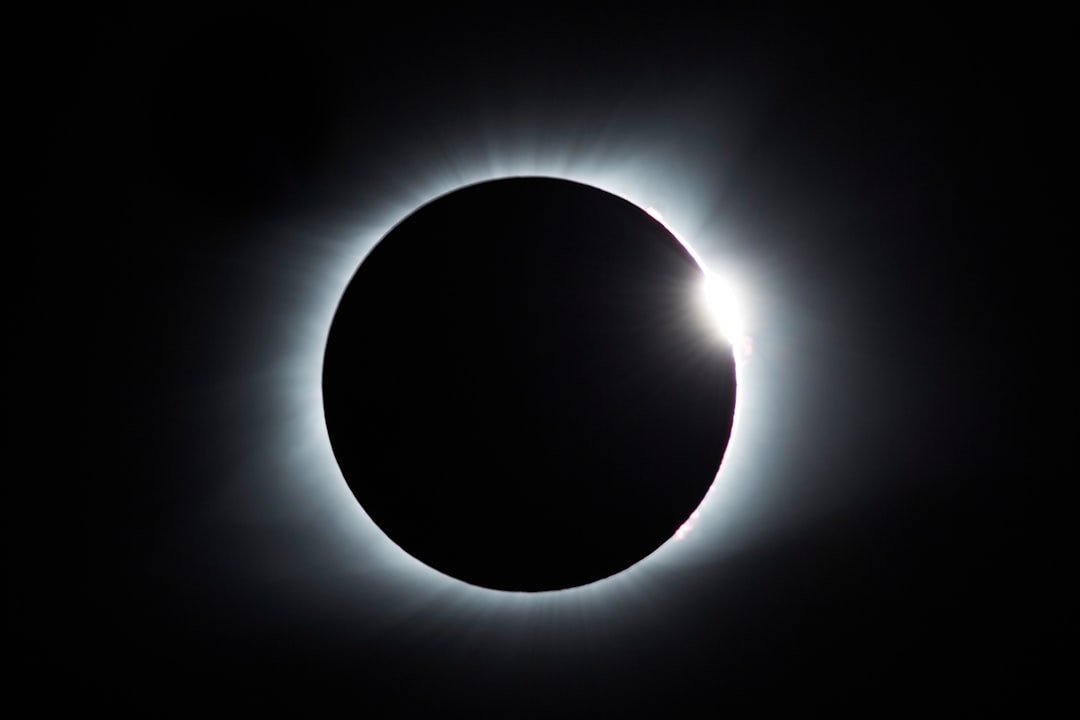
The Case for Experience Over Documentation
Renowned astrophysicist Dr. Tyler Nordgren advocates for a measured approach to eclipse photography, encapsulating his philosophy in a single memorable phrase: “Experience your inaugural eclipse; document your second.” This wisdom stems from decades of celestial observation and the recognition that the pressure to capture imagery often diminishes the profound personal experience of witnessing one of nature’s most spectacular phenomena.
The astronomical community recognizes eclipse events as exceptional occurrences. With millions of observers positioned along the totality corridor—stretching from Texas through Maine during recent North American events—these moments represent historically significant natural displays. Nordgren notes that such continental visibility patterns occur rarely within human lifetimes, making the upcoming 2026 eclipse another remarkable opportunity for both seasoned professionals and casual stargazers.
Technical Preparation: Foundation for Success
For those committed to capturing eclipse imagery, meticulous planning proves essential. The compressed timeframe demands advance preparation and muscle-memory familiarity with equipment operation. Industry professionals recommend investing in sturdy tripod systems and cable releases to eliminate camera shake during critical moments.
Perhaps most importantly, photographers must prioritize optical safety protocols. Direct solar observation damages both human vision and camera sensors instantaneously. NASA-certified solar glasses meeting ISO 12312-2 international standards combined with appropriately rated solar filters for lenses provide essential protection during partial phases. A critical consideration: photographers must remove all filters during totality itself, as failure to do so results in severely underexposed, disappointing final images.
Equipment Selection and Configuration
Lens selection depends entirely on compositional objectives. Telephoto options magnify solar detail, while standard focal lengths capture broader contextual elements. Specialized solar photography filters—typically crafted from polymer or metallized glass—reduce incoming light by factors of 100,000 or greater, enabling safe sensor exposure.
Camera settings require careful calibration beforehand. Testing exposure parameters with properly filtered test shots during pre-eclipse days allows photographers to establish optimal ISO, aperture, and shutter speed combinations. This preparatory work transforms spontaneous decision-making into practiced routine during the narrow observation window.
The Photography-Experience Balance
Dr. Nordgren references Warren de la Rue, the pioneering astrophotographer who first captured eclipse imagery, noting that de la Rue’s journal entries expressed a desire to witness subsequent eclipses without technological mediation. This historical perspective underscores a fundamental truth: the sensory immersion of direct observation—the sudden twilight at midday, the corona’s ethereal glow, the emotional magnitude of cosmic alignment—transcends what any photograph preserves.
For first-time eclipse observers, particularly those lacking advanced astrophotography experience, embracing the moment rather than constraining attention through a viewfinder enriches the experience substantially. The visual and emotional memory often outlasts any photograph.
Ultimately, eclipse photography represents the ultimate technical challenge for imaging professionals, but it needn’t define every observer’s engagement with these rare celestial alignments.