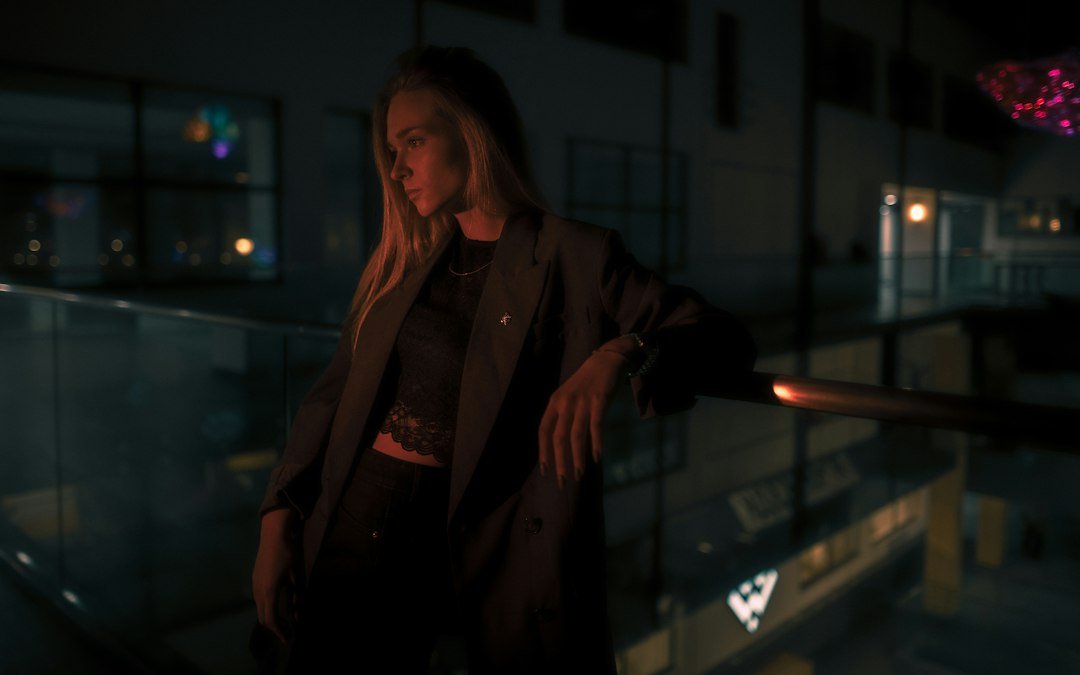
Teal shadows and orange highlights have become the go-to shorthand for a movie-style image. Many presets promise that look with a single click, and it’s easy to see why. Yet color grading contributes less to the cinematic feel of a frame than most photographers assume. The qualities that make a still resemble a film frame are rooted in decisions made at the moment of capture, and they’re skills you can start practicing the next time you pick up a camera.
Why Grading Gets All the Credit
Color is the most visible part of a finished image, so it’s natural to blame or credit it first. A warm highlight or a cool shadow catches the eye immediately. But a grade applied to a flat, poorly lit photo rarely turns it into something cinematic. It simply makes a weak image look like a weak image with a filter. Think of grading as the final polish on decisions already made in the field, not a substitute for them.
Lighting Does the Heavy Lifting
Cinematographers spend enormous effort shaping light, and that discipline translates directly to stills. Directional light with clear falloff gives a subject dimension and separates them from the background. Hard light can create dramatic, graphic shadows, while soft light wraps gently across skin and surfaces. Pay attention to where your light originates, how far it falls off, and whether it’s motivated by a believable source such as a window, a streetlamp, or a practical lamp in the scene. Those details give a frame its sense of place and narrative weight.
Composition and Negative Space
Films rarely frame subjects dead center without purpose. Cinematic compositions often leave generous negative space, placing the subject off-axis so the viewer senses what lies beyond the edge of the frame. Leading lines, foreground elements, and deliberate depth layering all reinforce that feeling. Shooting at a lower angle or from a slightly unexpected perspective can also make an ordinary moment feel staged and significant. Before you press the shutter, ask what the viewer should feel and where their eye should travel.
Lens Choice and Depth of Field
Focal length and aperture shape how a scene reads. Longer lenses compress the background and isolate subjects, while wider lenses pull the surroundings into the story. Selective focus, where only a narrow plane is sharp, creates the shallow depth of field associated with feature films. Remember that a wide aperture alone doesn’t guarantee cinematic results; the relationship between subject, distance, and background matters just as much. Experimenting with a single prime lens for a few weeks is one of the most effective ways to learn how these choices interact.
Where to Begin
If you want your photos to feel more like stills from a film, resist the urge to reach for a preset first. Spend your time learning to see light, arranging elements within the frame, and choosing optics that support your intent. Once those foundations are solid, color grading becomes a powerful refinement tool rather than a crutch. The photographers who consistently produce cinematic work tend to get the frame right before they ever open the editing software.