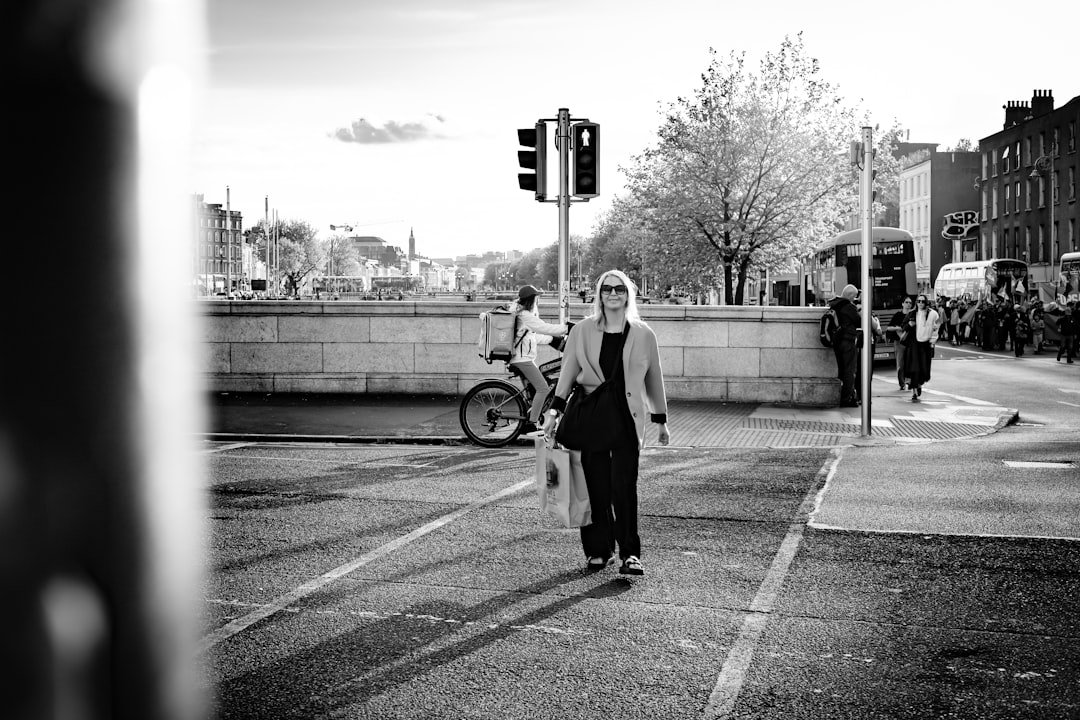
The Art of Unplanned Visual Exploration
Some of the most compelling photographic work emerges not from meticulous preparation or predetermined objectives, but rather from a fundamentally different approach to image-making. This methodology abandons the conventional framework of location scouting, detailed shot lists, and predetermined compositions. Instead, it embraces the moment when a photographer recognizes their unfamiliarity with surroundings and chooses to proceed despite—or perhaps because of—this disorientation.
This approach challenges the traditional documentary photography paradigm that emphasizes planning and control. Rather than imposing a predetermined vision onto a location, photographers operating in this mode allow the environment itself to guide their visual decision-making process. The practice requires a specific mindset: remaining receptive to unexpected compositional opportunities while surrendering the illusion of complete mastery over the narrative being constructed.
Mexico City as a Catalyst for Photographic Discovery
Urban environments like Mexico City provide particularly fertile ground for this exploratory methodology. The city’s complex topography, diverse neighborhoods, and dynamic street life create an inexhaustible array of photographic possibilities. What distinguishes such cities is their resistance to superficial understanding—they actively challenge visitors’ preconceived mental maps and initial assumptions about how to navigate both physically and visually.
The experience unfolds incrementally rather than catastrophically. When photographers venture beyond their established comfort zones and familiar districts, they encounter a subtle but profound recalibration of perception. This gradual cognitive shift represents something deeper than mere navigation challenges. It constitutes a fundamental restructuring of how one observes, interprets, and translates visual information into compelling imagery.
Technical and Conceptual Implications
From a technical perspective, this spontaneous approach demands greater camera familiarity and faster decision-making regarding exposure, focus, and composition. Photographers must develop intuitive responses to rapidly changing light conditions, subject movement, and spatial relationships without the luxury of extended preparation time. This methodology essentially accelerates the feedback loop between observation and execution—a capability that separates exceptional street photographers from those merely documenting their surroundings.
The psychological component proves equally significant. Working without a predetermined script requires photographers to embrace uncertainty while maintaining sufficient technical confidence to execute their vision reliably. This balance between openness and competence distinguishes purposeful exploration from mere aimlessness.
Redefining Success in Photographic Practice
Contemporary photography discourse often emphasizes pre-visualization and conceptual frameworks developed before exposing a single frame. However, this unstructured approach suggests an alternative paradigm where discovery and serendipity function as legitimate compositional tools rather than fortunate accidents. The discipline required to execute this methodology successfully rivals—and arguably exceeds—the precision demanded by more controlled photographic scenarios.
Urban exploration through photography ultimately becomes a conversation between observer and location. The photographer’s willingness to abandon preconceived notions creates space for authentic visual dialogue. This openness transforms the act of being lost from liability into unexpected asset, where disorientation becomes the very mechanism through which meaningful photographic moments reveal themselves.