Adobe’s Latest AI Solution Tackles a Persistent Retouching Challenge
The latest iteration of Adobe Photoshop, version 27.11, arrives with an ambitious new capability designed to address one of digital imaging’s most persistent technical obstacles. The Enhance Edge feature leverages artificial intelligence to eliminate chromatic fringing and unwanted edge artifacts—commonly referred to as halos—that frequently materialize when compositing isolated subjects against dramatically different background tones.
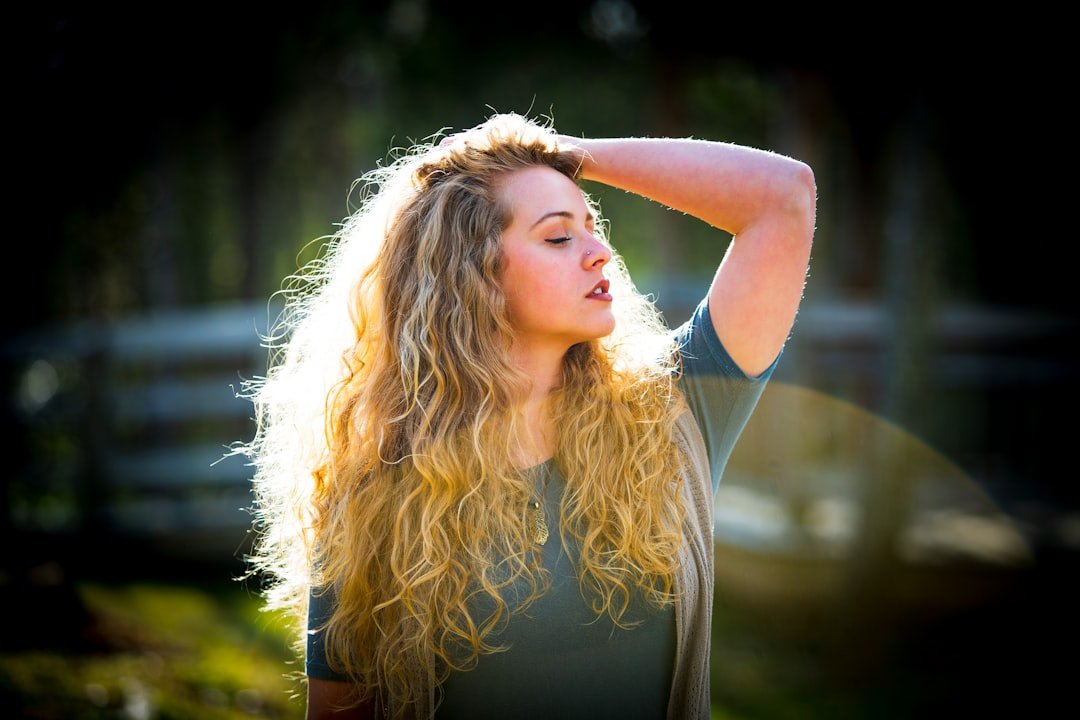
For professional retouchers and composite specialists, the handling of intricate hair selections has represented a significant bottleneck in the post-production workflow. The translucent, wispy nature of hair strands creates profound difficulties for traditional masking methodologies, often resulting in harsh, artificial-looking edges or obvious color bleeding at the boundary between foreground and background elements. This particular challenge has plagued the digital imaging community throughout the digital photography era.
Understanding the Technical Problem
When subjects are extracted using conventional selection tools and placed onto contrasting backgrounds, microscopic light halos frequently materialize along the perimeter. These artifacts stem from residual color information from the original background becoming trapped within the hair’s semi-transparent regions. The resulting visual degradation compromises the integrity of otherwise professional-quality composites, necessitating laborious manual refinement that consumes considerable production time.
Evaluating Adobe’s AI-Powered Response
Adobe’s commitment to integrating machine learning into its flagship application has yielded this new edge-refinement capability. However, introducing any automated solution targeting such a nuanced technical challenge warrants rigorous evaluation before deployment on client-facing assignments. The photographic community’s established skepticism toward algorithmic quick-fixes is thoroughly justified, particularly when dealing with the subjective nature of natural hair rendering.
The Enhance Edge functionality operates within Photoshop’s masking framework, analyzing pixel data along selection boundaries and intelligently blending chromatic information to minimize visibility of those problematic halos. Rather than relying on simple color correction, the AI-driven approach reportedly examines contextual information surrounding the selected edge, making micro-adjustments that preserve fine detail while reducing artifacts.
Practical Implementation Considerations
Professional photographers and image editors should approach this capability as a supplementary refinement tool rather than a complete replacement for traditional masking expertise. The most prudent methodology involves leveraging Enhance Edge as a starting point that substantially accelerates the refinement process, followed by targeted manual adjustments where necessary.
Given the feature’s beta status, users can expect ongoing improvements and parameter adjustments as Adobe collects performance data across diverse real-world scenarios. Testing the tool against various hair textures, lighting conditions, and background contrasts will provide essential insight into its operational parameters and limitations.
Looking Forward
Whether Enhance Edge represents a genuine paradigm shift or merely an incremental enhancement depends largely on actual performance across challenging extraction scenarios. The photography and retouching communities would be wise to conduct comprehensive testing before incorporating this technology into standard production pipelines.