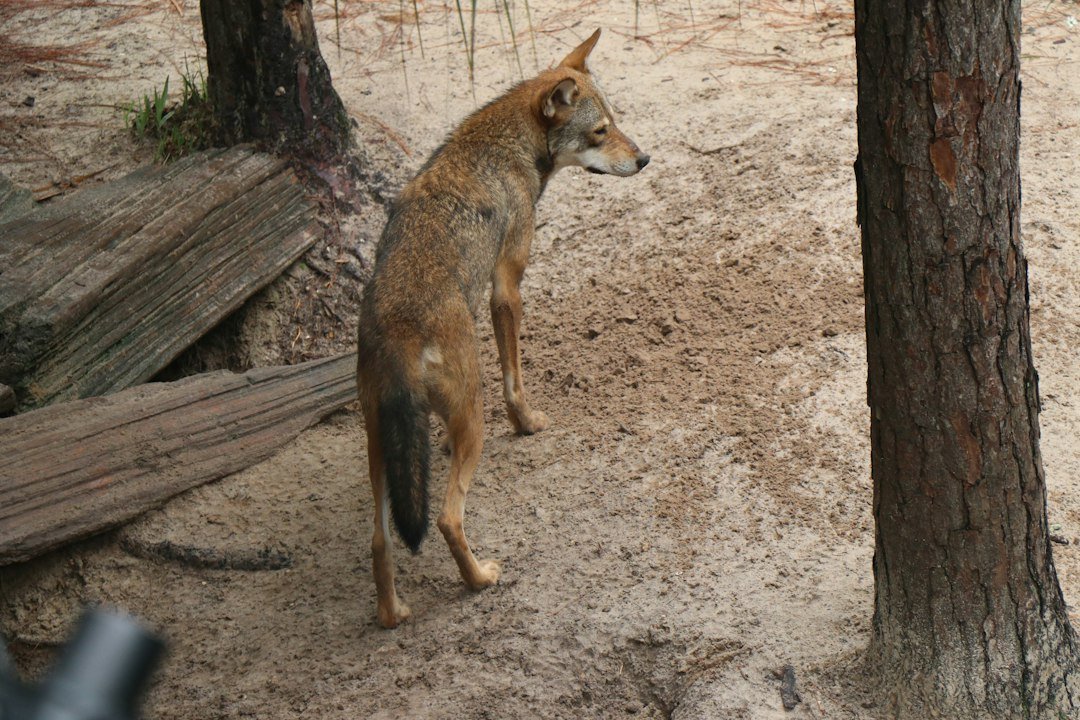
Wildlife rarely waits for ribbon-cuttings. Even though the $114 million Wallis Annenberg Wildlife Crossing has not yet officially opened, animals are already making their way across the structure, which spans one of the busiest stretches of asphalt in the region: Highway 101 in Agoura Hills, California.
Early Evidence Comes From Motion-Triggered Cameras
The first proof of activity came from trail cameras, the motion-activated devices that field researchers and wildlife biologists have relied on for decades. These units use passive infrared sensors to detect body heat and movement, then capture a frame, or a short burst of frames, without a person present. Many models use low-glow infrared flash, which allows them to record nocturnal animals with minimal disturbance. That quality makes them ideal for studying creatures that prefer the cover of darkness.
The images captured on the crossing show coyotes, making them among the first documented users of the site. For photographers, the results are a useful reminder of how much technical discipline goes into camera trap work. Placement, angle, trigger sensitivity, and the distance between the camera and the subject all influence whether an image is usable, and the low-light conditions of a rural overpass add further challenges for exposure and focus.
Why the Crossing Matters
Highway 101 has long acted as a barrier. Roads divide habitat into isolated patches, and animals that cannot safely cross them face higher risks of vehicle collisions and reduced access to mates and food. Over time, that isolation can weaken genetic diversity within local populations. Wildlife overpasses are designed to reverse that pattern by giving animals a protected route above the traffic, and a structure of this scale is intended to serve a broad range of species rather than just one.
Because the crossing is still settling in, the early images carry significance beyond a single species. Each frame offers a baseline that researchers can compare against future data, helping them measure how quickly and how consistently wildlife adopts the new infrastructure.
A Growing Role for Visual Documentation
Projects like this highlight the expanding role of photography in conservation. Camera traps have become essential tools for population surveys, behavioral studies, and monitoring the effectiveness of land management decisions. Their images also play a powerful communication role, turning abstract data into visual evidence that engineers, policymakers, and the public can understand.
For camera enthusiasts and professionals alike, the story is a compelling example of how a simple, weatherproof device can document a major environmental milestone. As the crossing moves toward its official opening, more images are likely to emerge, and each one will add to a growing record of how wildlife responds when people build a path for them above a road.