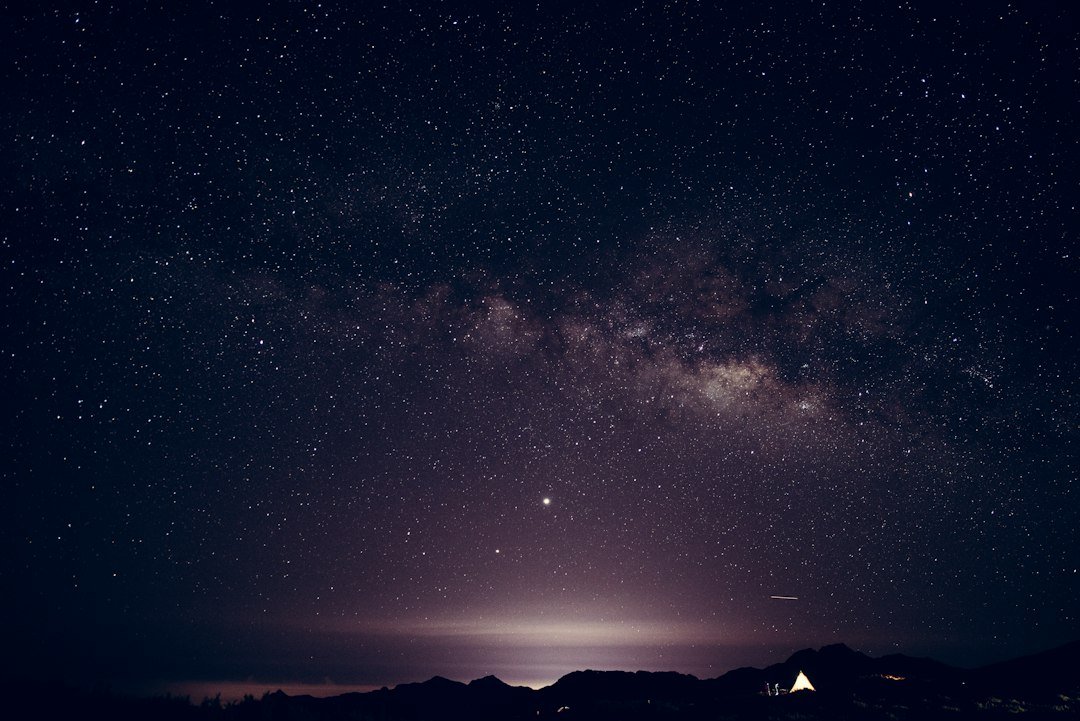
Breaking Through the Urban Glow: A Technical Achievement in Nighttime Cityscapes
New York City’s perpetual luminescence has long challenged astrophotographers seeking to document celestial phenomena from within one of the world’s most densely populated urban centers. Recently, however, an innovative photographer has demonstrated that capturing the Milky Way’s grandeur above Manhattan is not merely possible—it’s achievable through sophisticated technical approaches and specialized equipment.
The photographer accomplished this feat by leveraging infrared imaging technology, a specialized approach that diverges significantly from conventional visible-light astrophotography. Infrared sensors operate at wavelengths beyond human visual perception, allowing them to penetrate atmospheric haze and artificial lighting that would typically overwhelm traditional sensors. This technical innovation represents a meaningful advancement in how urban professionals can document celestial events in light-polluted environments.
The Challenge of Shooting Above the City That Never Sleeps
Light pollution remains the primary adversary for astronomers and photographers working in metropolitan areas. New York City generates an estimated light output visible from space, creating what scientists call a “sky glow” that obscures fainter celestial objects. This environmental challenge has traditionally forced astrophotographers to venture far beyond city limits to capture compelling cosmic imagery.
The successful project demonstrates that specialized equipment and refined post-processing methodologies can partially overcome these environmental constraints. By employing infrared capture technology, the photographer accessed spectral data invisible to standard cameras, effectively bypassing much of the visible-light interference that typically degrades image quality in urban settings.
Technical Execution and Method
The completed work takes the form of a time-lapse sequence, a format that compresses extended exposure periods into accelerated visual narratives. Time-lapse cinematography requires meticulous planning, including precise intervalometer settings, manual focus calibration, and careful exposure calculations across multiple frames. The infrared approach added another layer of complexity, requiring the photographer to adjust standard workflows for non-visible wavelengths.
This execution method reveals important industry trends. Contemporary astrophotographers increasingly explore alternative spectral ranges and unconventional processing techniques to produce compelling imagery despite environmental limitations. Rather than accepting defeat in light-polluted zones, forward-thinking practitioners are discovering creative technological solutions.
Implications for Urban Photography Practice
The achievement holds broader significance for the photography community. As urbanization continues worldwide, photographers face mounting pressure to create compelling nighttime and celestial imagery within populated areas. This project suggests viable pathways forward, indicating that technical innovation and specialized equipment can democratize astrophotography access for city-based professionals.
The infrared methodology also opens new artistic possibilities. Images captured beyond visible wavelengths often reveal unexpected aesthetic qualities, generating visual narratives that differ substantially from conventional night sky photography. For creatives seeking distinctive visual approaches, this technical pathway offers genuinely novel possibilities.
Looking Forward
As camera manufacturers continue developing improved infrared sensors and specialized night-vision technology, opportunities for urban astrophotography will likely expand. Professional photographers working in metropolitan regions need not resign themselves to mediocre celestial imagery. Through technological sophistication and methodical technical execution, even Manhattan’s persistent glow can be transcended, revealing the cosmos in unexpected ways.