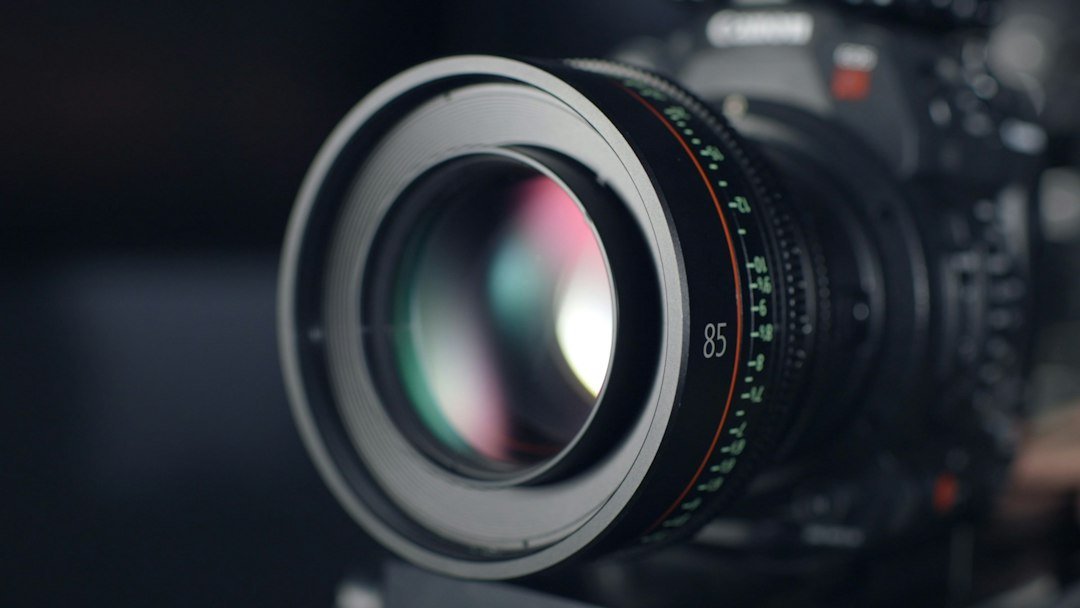
The Timeless Appeal of Film-Era Glass in the Digital Age
Kansas photographer Travis Butler represents a growing segment of contemporary imagemakers who deliberately reject modern lens designs in favor of mechanical optics engineered decades ago. His dual-camera setup—anchored by a Sigma fp mirrorless body and Panasonic Lumix S5—showcases how legacy glass continues to deliver distinctive optical characteristics that challenge the assumption that newer always means better.
A Journey Sparked by Mechanical Curiosity
Butler’s photographic trajectory began with mechanical fascination rather than artistic ambition. His father’s refurbished Yashica SLR served as an initial gateway, though financial constraints during his student years prevented serious film experimentation. The pivotal moment arrived with an Olympus D-500L digital camera, transforming casual interest into dedicated practice—a commitment that has spanned two decades of continuous image-making.
The Two-Kit Philosophy
Butler’s approach to equipment reflects practical flexibility. His “larger kit” pairs the full-frame Lumix S5 with contemporary zooms for assignments requiring versatile focal lengths. The complementary “compact kit” combines the diminutive Sigma fp—known for its svelte dimensions and exceptional build quality—with an assortment of adapted vintage primes. This modular strategy allows seamless transitions between documentary and landscape work without sacrificing optical consistency across different shooting scenarios.
His most-utilized lens exemplifies this philosophy: a Minolta MD 35-70mm F3.5 Macro that has proven remarkably versatile across environmental portraiture, architectural documentation, automotive photography, and museum interiors. While the F3.5 maximum aperture presents limitations in low-light conditions, Butler credits the optic’s superior tonal rendering and color transmission for offsetting these technical constraints.
Building an Ecosystem of Legacy Optics
Butler’s lens collection reveals the strategic advantages of cross-manufacturer mount compatibility. His inventory includes Minolta Rokkor elements, Konica Hexanon optics, Pentax Super-Takumar glass, and various Olympus OM Zuiko designs—each contributing distinct optical signatures while remaining adaptable to his camera bodies through contemporary mount solutions. This approach grants creative flexibility impossible with proprietary modern systems, allowing photographers to select camera bodies based on ergonomics and features while maintaining optical consistency.
Practical Considerations and Field Strategies
Beyond optical performance, Butler emphasizes pragmatic accessories. Vintage Tamrac camera bags—specifically models featuring Cordura construction and suede hardware from the brand’s earlier manufacturing era—provide weatherproof protection without broadcasting expensive equipment. His field kit includes utilitarian items like precision nail clippers (for emergency maintenance and repairs) and a secondary zoom in a belt-mounted sleeve, accommodating spontaneous shooting opportunities across diverse environments from Washington D.C. to Red Rock Canyon.
Why Vintage Glass Matters
Butler’s documented results demonstrate that optical excellence transcends manufacturing decades. His most compelling photographs frequently emerge from unexpected moments rather than meticulously planned compositions—a testament to how deeply ingrained knowledge of vintage lens characteristics enables intuitive image-making. The distinctive color rendering and bokeh characteristics of film-era optics continue attracting contemporary photographers seeking visual differentiation in an era of homogenized digital aesthetics.
For photographers considering legacy glass, Butler’s experience validates that mechanical reliability, optical sophistication, and creative flexibility often justify the effort of adaptation and learning curve—particularly when paired with thoughtful camera selection and disciplined field methodology.