The Rarest of Opportunities in Aerospace Photography
Capturing rocket launches demands a unique skill set that few photographers ever master. The window of opportunity spans mere seconds, environmental conditions push equipment to its limits, and creative flexibility becomes almost nonexistent. Jared Sanders has built his reputation on thriving within these constraints, and when NASA’s Artemis II mission arrived—marking humanity’s return to crewed lunar exploration for the first time since 1972—the stakes reached unprecedented heights for his career.
Against formidable odds, Sanders returned with remarkable footage and stills from the launch event, including an unexpected yet touching moment of a newly engaged couple’s celebration captured in his frame. Through an in-depth conversation about his journey, technical approach, and specialized equipment selection, we explore what separates exceptional launch photography from ordinary attempts.
From Digital Artistry to Optical Precision
Sanders’ path to becoming a sought-after launch photographer was far from linear. His formal training began in 2008 with a focus on visual effects design, leading him directly into California’s VFX industry post-graduation. His initial role involved primarily post-production work, disconnected from traditional cinematography.
A pivotal shift occurred when he transitioned to a full-service creative studio operating as both producer and supervisor. Suddenly, Sanders found himself collaborating with cinematographers and directors on active sets, absorbing production methodology firsthand. “The knowledge accumulated through studio work proved invaluable when I eventually picked up a camera,” he reflected.
In 2017, Sanders co-established a creative marketing firm with limited financial resources. Unable to hire dedicated visual talent, he applied his accumulated technical knowledge to handle the company’s photographic needs. His combined background in lighting design, directorial concepts, and narrative development unexpectedly created a comprehensive foundation for professional photography.
The Florida Space Coast Beckons
Pandemic-related circumstances, including business partnership dissolution and a desire to escape Los Angeles, drew Sanders back to his Florida roots. The Space Coast’s recent commercial and governmental aerospace activity presented an obvious subject for consistent, location-independent work. His familiarity with the region, combined with accelerating SpaceX operations, crystallized his ambition: becoming a specialized aerospace photographer.
After consulting with established local photographers about access protocols, Sanders discovered Space Explored, a technology publication seeking multimedia contributors. Following NASA’s media credentialing procedures, he gained official press access to launch facilities and restricted viewing areas.
The Learning Curve: From Concept to Execution
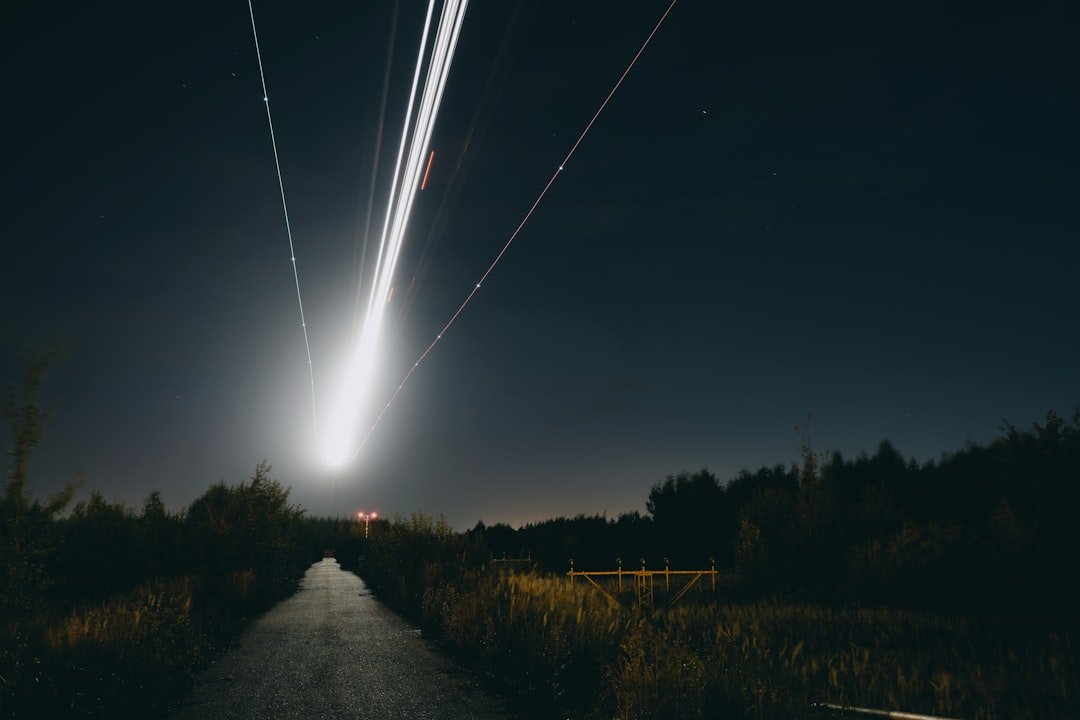
Initial attempts employed long-exposure techniques from public beaches, attempting to trace the rocket’s trajectory across four-minute exposure windows. Maintaining perfect camera stability, triggering at optimal moments, and managing the unpredictability of post-exposure processing proved brutally humbling. Frequently, the results were unusable.
Night launches presented amplified difficulty through extreme tonal contrast between the rocket’s brilliant plume and the surrounding darkness. The fundamental challenge persisting across all launch work remains the singular, unrepeatable nature of the event. With compressed timing and unprecedented visual intensity, aerospace photography offers no margin for technical error or second attempts.
For the Artemis II assignment, Sanders deployed a borrowed premium telephoto lens valued at $16,000—a testament to the specialized optical requirements for capturing distant spacecraft during their most dramatic moments. This investment in precision glass underscored the technical demands of his specialized niche.