The Persistence Behind an Extraordinary Celestial Alignment
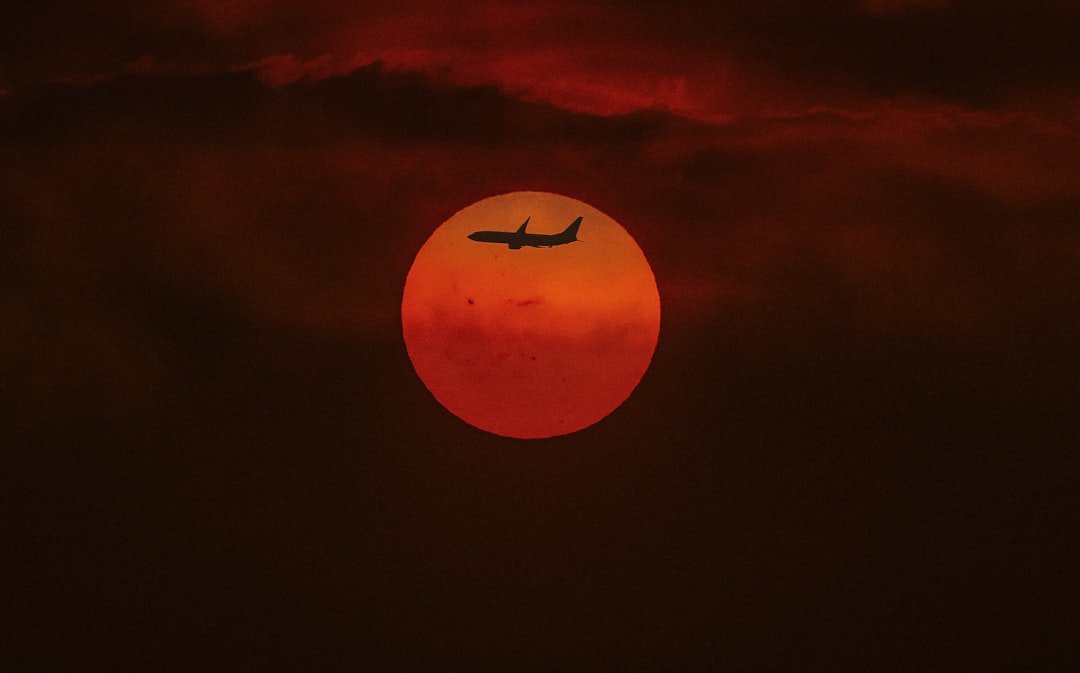
In a remarkable demonstration of patience and technical mastery, astrophotographer Andrew McCarthy recently achieved what many would consider an impossible shot: documenting a commercial aircraft silhouetted against the Sun’s brilliant disk. The feat required an extraordinary commitment of time and resources, involving nearly 1.7 million individual exposures captured across a six-day observation window.
McCarthy’s accomplishment exemplifies the intersection of precision planning and astronomical timing that defines modern astrophotography. The image documents a Boeing 737 transiting across the solar surface—a fleeting moment that lasted mere seconds during its passage. Capturing such a rare occurrence demands not only specialized equipment and techniques but also an intimate understanding of flight patterns, solar observation protocols, and high-speed photography.
The Technical Challenge of Solar Imagery
Photographing celestial bodies with aircraft in the frame presents extraordinary technical obstacles. The Sun’s intense luminosity requires sophisticated filtration systems and precisely calibrated exposure settings to prevent sensor damage while maintaining detail in both the solar surface and the aircraft silhouette. Professional astrophotographers employ specialized solar filters and advanced metering techniques to manage the extreme contrast inherent in such compositions.
The sheer volume of frames—approaching two million—reflects the computational demands of modern astrophotography. High-speed burst shooting, combined with post-processing workflows that analyze and sort thousands of images, has become standard practice for documenting rare astronomical events. This methodical approach allows photographers to identify those singular frames where all variables align perfectly: optimal focus, precise timing, and minimal atmospheric distortion.
Planning and Preparation
McCarthy’s six-day campaign represents months of preliminary research. Successful solar transit photography requires calculating aircraft flight paths, predicting their intersection with solar coordinates, and identifying optimal observation locations. This meticulous planning, combined with contingencies for weather and equipment variables, separates achievable goals from mere speculation.
The dedication required for such projects has become increasingly common among professional astrophotographers seeking distinctive imagery. While luck certainly plays a role, the real achievement lies in systematic preparation and the willingness to invest significant time pursuing a singular vision. This disciplined approach has elevated astrophotography from casual stargazing to a sophisticated technical discipline.
A Growing Trend in Astrophotography
McCarthy’s accomplishment reflects a broader evolution within the astrophotography community, where photographers continuously push technical boundaries. Contemporary imaging sensors, improved processing software, and refined observational techniques have made previously impossible captures achievable. The fusion of commercial aviation patterns with astronomical phenomena represents a unique niche that challenges photographers to think creatively about composition and subject matter.
This particular image joins a growing gallery of remarkable astronomical captures that demonstrate how patience, technical proficiency, and strategic planning converge to create truly distinctive visual documentation. For the broader photography community, McCarthy’s persistence serves as an inspiring reminder that extraordinary results often require extraordinary effort.