A Revolutionary Approach to Large-Scale Conceptual Imagery
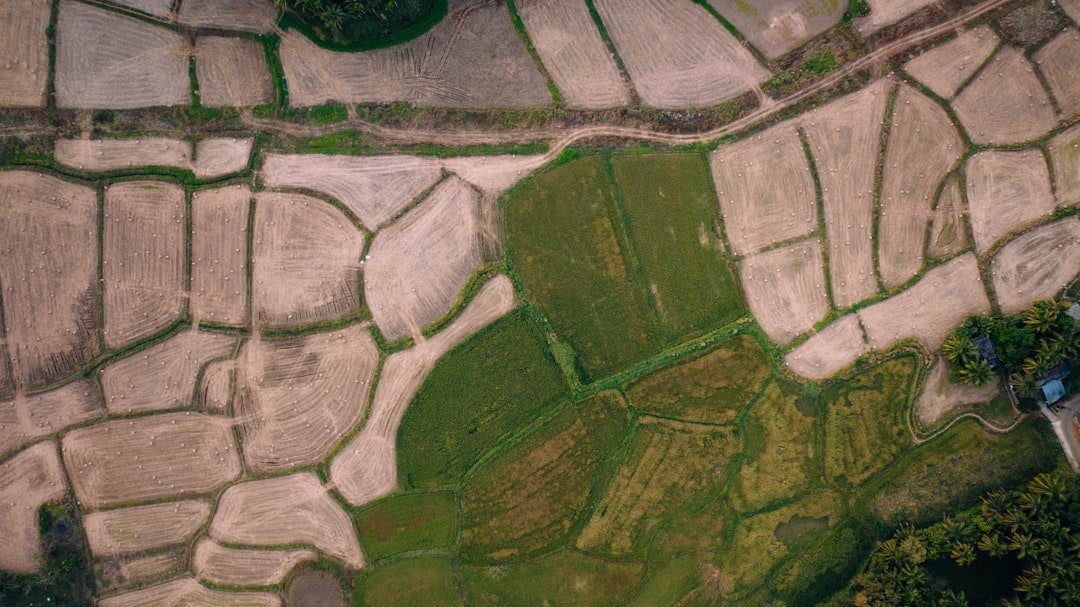
In the rural expanses surrounding Toulouse, France, a groundbreaking artistic endeavor has materialized that challenges conventional notions of photographic composition and scale. The project, conceived by London-born artist with Spanish heritage Almudena Romero, transforms agricultural terrain into a colossal visual statement that demands an aerial vantage point for complete appreciation.
The installation features a striking ocular form—a giant eye rendered across the landscape—that serves as both a literal and metaphorical centerpiece. This creative vision falls under the umbrella of site-specific art installations, representing an intersection between environmental intervention, photography, and large-scale sculptural practice that has gained prominence in contemporary art circles.
The Mechanics Behind Monumental Earth-Based Art
What distinguishes this undertaking from traditional photography is its unique exhibition methodology. Rather than being framed within gallery walls or displayed on exhibition surfaces, the work exists exclusively within the visual language of aerial perspective. This concept aligns with the legacy of earth art movements that prioritized landscape transformation and documentation through overhead imagery—a technique that gained prominence with developments in drone technology and satellite photography.
Romero’s methodology, titled Farming Photographs, integrates agricultural practices with artistic expression, utilizing the cultivated environment as both medium and canvas. The scale of the endeavor—spanning substantial portions of cultivated land—necessitates meticulous planning, precise spatial calculations, and intimate knowledge of crop cycles and seasonal variations.
Capturing Scale and Perspective
From terrestrial observation, the installation appears as fragmented or abstract elements scattered across farmland. The transformation occurs only through elevated observation—whether via aircraft, helicopter, or high-altitude drone systems—which enables viewers to comprehend the complete compositional intention. This methodology echoes principles employed in landscape photography and architectural documentation, where perspective fundamentally alters interpretation.
The optical element chosen as the artistic subject carries considerable symbolic weight. Eyes frequently appear in artistic discourse as metaphors for perception, observation, and witness. In this context, positioned above the French countryside where countless eyes might eventually observe it from above, the imagery creates a paradoxical conversation about looking and being perceived.
Contemporary Context Within Art Photography
This initiative participates within a broader contemporary movement wherein photographers and visual artists leverage geographical space as creative territory. Similar projects have examined how photographic principles—composition, focal points, depth, perspective—translate to environmental scales. The integration of agricultural stewardship with artistic production also speaks to growing intersections between environmental consciousness and cultural expression.
The sustainability of such installations presents compelling questions within conservation discourse. Unlike traditional artistic mediums, these works evolve with seasonal rhythms, weather patterns, and horticultural necessities, creating dynamic, ephemeral qualities that challenge permanence conventions in visual arts.
Accessibility and Future Implications
As drone technology becomes increasingly accessible and affordable, similar large-scale conceptual projects may proliferate. This democratization of aerial perspective represents a paradigm shift in how artists conceptualize audience viewpoints and compositional strategies. Romero’s French installation potentially signals emerging possibilities for collaborative engagement between agricultural communities, technological innovation, and creative expression.
The Toulouse eye ultimately invites reconsideration of photographic boundaries, suggesting that the medium extends far beyond conventional sensors and lenses into the physical world itself—where landscape becomes aperture, cultivation becomes technique, and geography transforms into gallery.