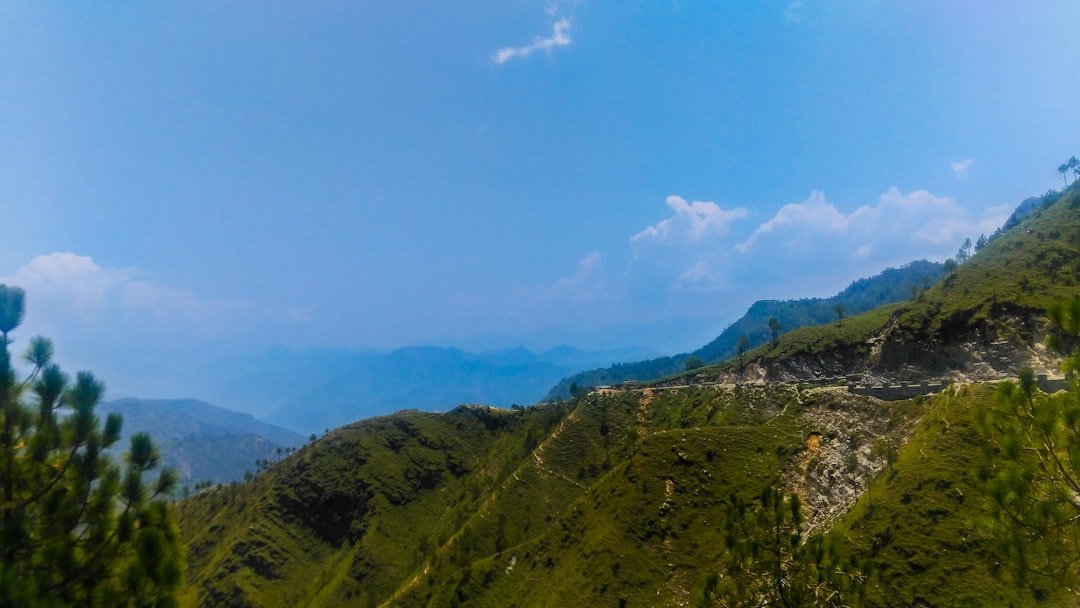
Breaking Through the Saturation in Landscape Photography
The landscape photography market has become increasingly saturated in recent years. As camera technology continues to democratize professional-quality image capture, the barrier to entry has lowered considerably. Modern sensors, sophisticated autofocus systems, and computational photography have enabled photographers at all skill levels to produce technically sound images with relative ease. This technological advancement, while beneficial to the craft overall, has created a challenging environment for artists seeking to differentiate their work from the endless stream of visually competent landscape imagery flooding social media and stock photography platforms.
Rather than pursuing the conventional wisdom of investing in premium equipment or chasing exclusive locations, accomplished photographer Ben Harvey proposes an unconventional solution: adopting compositional principles more commonly associated with portraiture to transform how landscape photographers approach their craft.
Rethinking Depth of Field in Wide Scenes
The crux of Harvey’s argument centers on the strategic manipulation of depth of field—a technique that has long been the cornerstone of contemporary portrait photography. Portraitists have historically leveraged shallow depth of field to isolate subjects, create dimensional separation, and direct viewer attention with surgical precision. In contrast, landscape photographers have traditionally favored expansive depth of field, striving to render maximum sharpness from foreground to horizon. This fundamental philosophical difference has created an opportunity for innovation.
By selectively applying shallow depth of field principles to landscape compositions, photographers can introduce visual intrigue and compositional complexity that challenges viewer expectations. This approach encourages the deliberate use of selective focus to emphasize specific landscape elements—whether a wildflower meadow, textured rock formations, or atmospheric qualities—while allowing peripheral areas to soften into artistic abstraction.
The Competitive Advantage of Technical Creativity
This methodological crossover addresses a critical challenge in contemporary landscape photography: standing out in an oversaturated market requires conceptual innovation rather than equipment upgrading or destination tourism. The most impactful differentiators are often creative choices rather than gear specifications or geographic novelty. By implementing portraiture-derived techniques, landscape photographers can develop a distinctive visual voice that transcends conventional aesthetic expectations.
The practical application involves careful lens selection, precise aperture calibration, and intentional focal point placement to create images that possess both the environmental context of landscapes and the emotional intimacy typically associated with portrait work. This hybrid approach generates images with increased visual impact and narrative depth.
For photographers seeking meaningful advancement in their landscape practice, Harvey’s perspective offers a refreshing counterpoint to the gear-centric and destination-obsessed narratives that dominate contemporary photography discourse. By borrowing proven compositional strategies from adjacent genres and applying them thoughtfully to landscape work, artists can unlock new creative possibilities and create work that genuinely captures viewer attention in an increasingly competitive visual marketplace.