An Unconventional Solution to an Enormous Problem
When filmmakers push the boundaries of cinema technology, they often encounter obstacles that standard equipment simply cannot solve. Christopher Nolan’s latest blockbuster, The Odyssey, represents a watershed moment in motion picture history as the inaugural narrative feature shot entirely on 15/70mm IMAX film stock. Each frame captures an expansive 70×48.5mm negative, delivering unparalleled visual fidelity to audiences willing to seek out specialty theatrical venues.
The technical challenges of working with IMAX acquisition systems are substantial and well-documented within industry circles. These cameras are notoriously unwieldy, demanding specialized infrastructure and highly trained technical personnel. Yet a lesser-known production detail recently surfaced through photography enthusiasts, revealing an ingenious workaround that Nolan’s team employed on set.
The Director’s Viewfinder Dilemma
Every cinematographer maintains a director’s viewfinder—a crucial tool for pre-visualization and shot composition before committing to lengthy camera setup procedures. This becomes particularly vital when shooting photochemical film, where immediate digital feedback is unavailable and every take carries significant material costs. Traditional viewfinders incorporate interchangeable lens mounts that simulate the optical characteristics of production glass.
However, IMAX optics present a unique problem. The massive film gate requires correspondingly enormous lens elements and substantially different optical designs than standard 35mm or full-frame digital systems. Commercially manufactured viewfinders compatible with IMAX glass simply do not exist in any practical form.
Innovation Through Repurposing
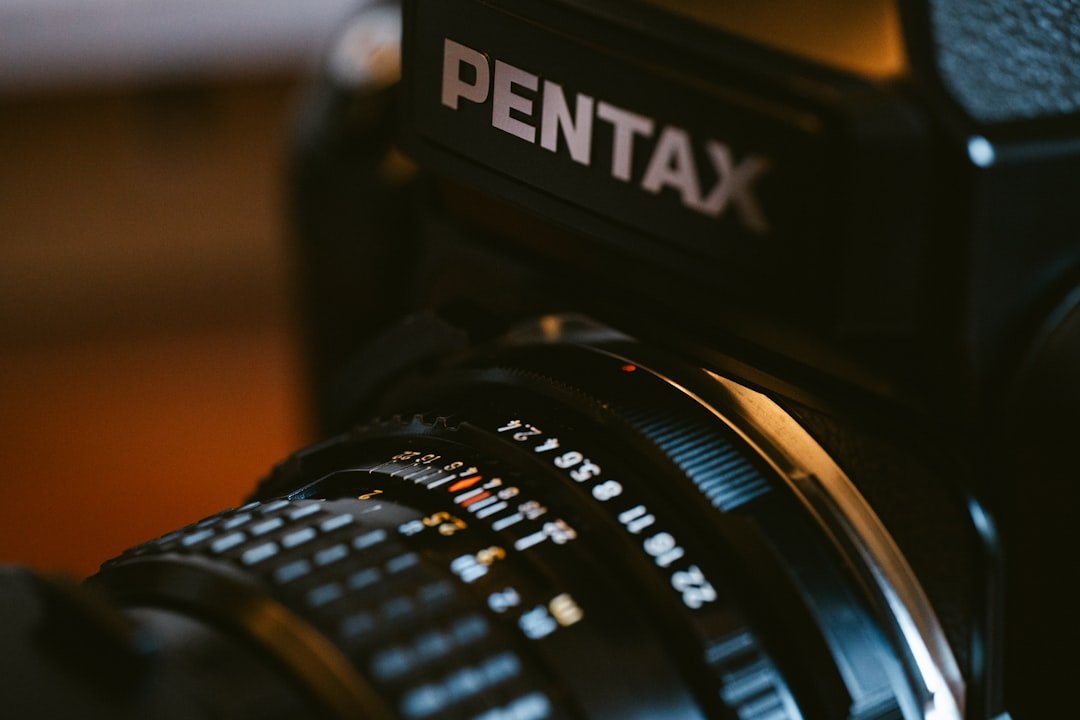
According to detailed documentation shared by photography specialists, the production solved this engineering puzzle through creative adaptation. The team modified a Pentax 67—a legendary medium-format instrument renowned for its generous 56×70mm film plane—into a functional IMAX viewfinder. The modification involved removing the shutter mechanism and redesigning the lens mount to accept IMAX cinema optics.
While this conversion eliminated the camera’s image-capture capability, the retained viewfinder and mirror assembly proved capable of displaying the complete field of view through IMAX lenses. Custom frame-line overlays indicated the specific boundaries of the 15/70mm negative format, enabling Nolan and cinematographer Hoyte van Hoytema to finalize composition and focal length selection before deploying the substantially larger production camera systems.
A Pattern of Pragmatic Problem-Solving
This approach wasn’t entirely unprecedented within Nolan’s production methodology. Similar viewfinder adaptations appeared during Dunkirk’s principal photography, and director Cary Joji Fukunaga was documented employing comparable equipment while helming No Time to Die. Cinematographer James Neihouse has publicly discussed analogous modifications, though his version apparently retained functional shutter mechanisms for still image documentation.
The Irony of Scale
Photography professionals recognize the inherent humor in deploying a Pentax 67—already considered substantially oversized for handheld medium-format work—as a lightweight alternative within IMAX production. This peculiar necessity underscores the extraordinary dimensional demands of large-format cinema acquisition.
The market validated Nolan’s commitment to the format decisively. The Odyssey achieved the highest-grossing IMAX release status in exhibition history, with 70mm presentations generating $37.5 million from the film’s billion-dollar worldwide total. Despite requiring viewers to undertake significant journeys to specialty-equipped theaters, audiences demonstrated enthusiastic adoption of the immersive cinematographic experience.