The Price-to-Performance Equation in Long-Range Optics
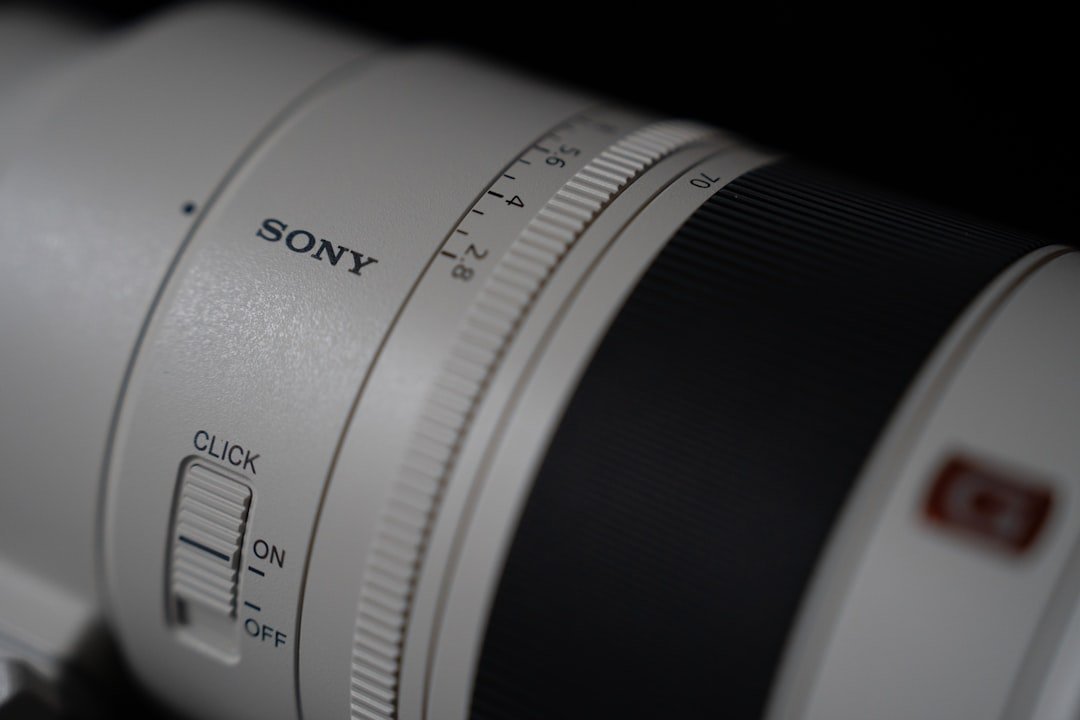
Sony’s 100-400mm f/5.6-f/8 telephoto lens presents an intriguing proposition for contemporary photographers seeking extended focal length capabilities without the accompanying financial burden. At approximately $850, this optic commands roughly one-fifth the investment required for its faster f/4.5 counterpart, yet this substantial price differential warrants deeper examination. Understanding what photographers genuinely sacrifice—and gain—by opting for the slower maximum aperture becomes essential before making this purchasing decision.
Aperture Trade-offs in Practical Application
The distinction between f/4.5 and f/8 extends far beyond mere numerical specifications on a specification sheet. This two-and-a-third stop reduction in light-gathering capacity directly impacts several shooting scenarios that professionals and enthusiasts routinely encounter in the field. Wildlife photographers working during overcast conditions or in forest environments may experience noticeably slower autofocus performance, as modern camera systems depend on adequate light transmission for optimal subject tracking and focus acquisition.
Exposure flexibility represents another crucial consideration. The narrower aperture demands either elevated ISO settings, extended shutter speeds, or both—a reality that introduces tangible constraints for photographers attempting to maintain subject isolation through shallow depth-of-field techniques. While modern sensor technology has dramatically improved high-ISO performance, the physics of light transmission remain immutable.
Practical Advantages of the Budget-Conscious Route
Despite these optical limitations, the Sony 100-400mm f/5.6-f/8 delivers compelling advantages that justify its popularity among traveling photographers and enthusiasts with limited budgets. The reduced weight and compact form factor significantly enhance portability during extended field sessions, particularly valuable when combined with camera bodies and additional equipment. This ergonomic benefit shouldn’t be dismissed, as equipment fatigue directly influences creative output and shooting longevity.
Furthermore, the optical quality delivered by Sony’s engineering proves remarkably competent across the focal range. Modern lens design, aspherical elements, and sophisticated coatings help minimize optical aberrations and deliver satisfying image sharpness for the majority of shooting applications.
Evaluating Your Actual Requirements
The genuine cost of this aperture compromise ultimately depends on individual photographic priorities and typical shooting conditions. Wildlife specialists working in consistently bright daylight with fast film stocks may discover the performance differential negligible for their requirements. Conversely, photographers prioritizing versatility across variable lighting conditions might find the investment in the faster f/4.5 aperture justified by the improved operational flexibility it provides.
Travel photographers balancing equipment weight against optical performance frequently determine that the f/8 variant represents an optimal compromise. Similarly, photographers exploring telephoto capabilities for the first time benefit from the lower financial commitment, allowing experimentation without substantial risk.
Making Your Decision
Rather than viewing aperture specifications in isolation, consider your complete photographic workflow: typical shooting environments, lighting conditions you most frequently encounter, and your specific creative vision. The Sony 100-400mm f/5.6-f/8 occupies a legitimate position within the manufacturer’s lineup, offering substantial optical capability at an accessible price point. For many contemporary photographers, this balance between economy and performance represents a sensible entry point into quality telephoto photography.