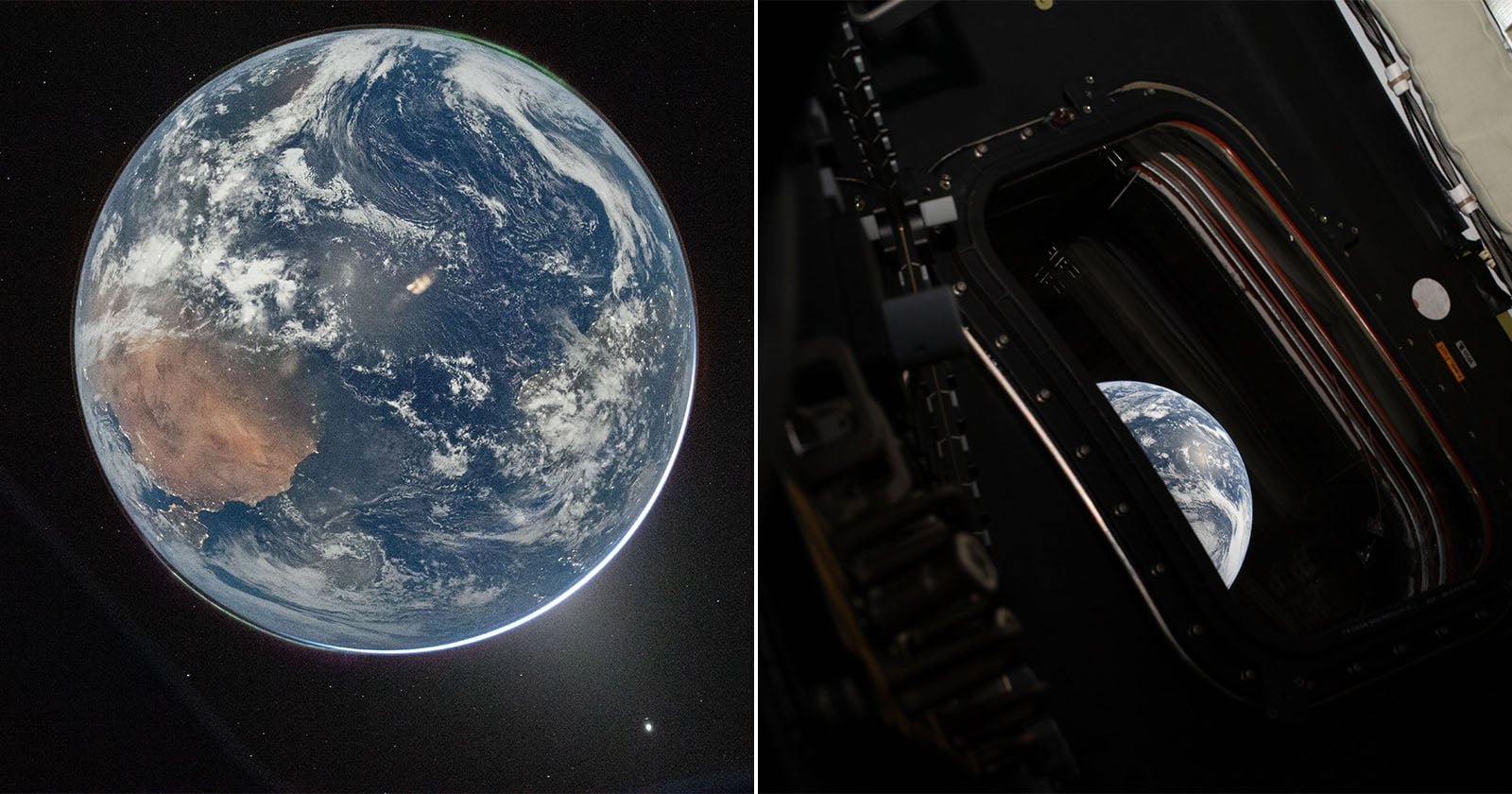
Historic Photography Marks Milestone in Deep Space Exploration
In a momentous achievement for space exploration, the Artemis II crew has successfully transmitted their initial optical documentation of Earth as their Orion spacecraft departed terrestrial orbit and commenced its trajectory toward the lunar destination. The dual images, captured through the observation ports of NASA’s next-generation capsule, represent the opening chapter of what promises to be an unprecedented visual record of humanity’s return to deep space missions.
Mission Commander Reid Wiseman operated the camera systems aboard the Orion spacecraft, leveraging the vessel’s specialized viewport infrastructure to document Earth from an increasingly distant vantage point. These inaugural photographs carry considerable significance within the space photography community, as they demonstrate the optical capabilities of hardware designed specifically for extraterrestrial observation and documentation.
Technical Excellence in Extreme Conditions
The successful transmission of these preliminary images showcases the sophisticated imaging systems integrated into Orion’s design. Operating within the unique constraints of spacecraft environments—including extreme temperature fluctuations, radiation exposure, and microgravity conditions—these images exemplify the intersection of aerospace engineering and visual documentation technology. The capsule’s window architecture has been engineered to provide both scientific utility and documentary capability, allowing crew members to simultaneously conduct observations and capture high-fidelity imagery.
From a photographic perspective, these images present distinctive challenges inherent to deep space documentation. The absence of atmospheric filtering, combined with the extreme distance from Earth, creates a visual signature distinctly different from terrestrial or near-Earth orbital photography. The resulting aesthetic provides valuable insights into planetary observation techniques and camera performance under conditions far beyond conventional studio or field photography parameters.
First of Many Documentation Milestones
The release of these initial photographs marks the commencement of an extensive visual documentation program throughout the Artemis II mission timeline. Each image transmitted from the crew contributes to both scientific data collection and public engagement with humanity’s renewed commitment to lunar exploration. In today’s media landscape, where visual content drives public interest and understanding, these photographs serve as compelling evidence of human achievement in space exploration.
The role of professional documentation throughout space missions has evolved considerably. Modern astronauts function not merely as mission operators but as visual communicators, responsible for capturing imagery that informs scientific inquiry while simultaneously inspiring global audiences. This dual responsibility requires proficiency with specialized camera systems, understanding of composition and lighting within spacecraft environments, and the ability to document dynamic mission phases with consistency and clarity.
Looking Forward
As the Artemis II mission progresses, observers in the photography and aerospace communities anticipate additional visual documentation from the crew. These images collectively contribute to a comprehensive photographic archive of contemporary space exploration, supplementing instrumental data with human perspective and artistic sensibility. The successful transmission of Earth photography from the Orion spacecraft demonstrates the continued importance of visual documentation in advancing both scientific understanding and public appreciation for humanity’s ambitious ventures beyond our home planet.