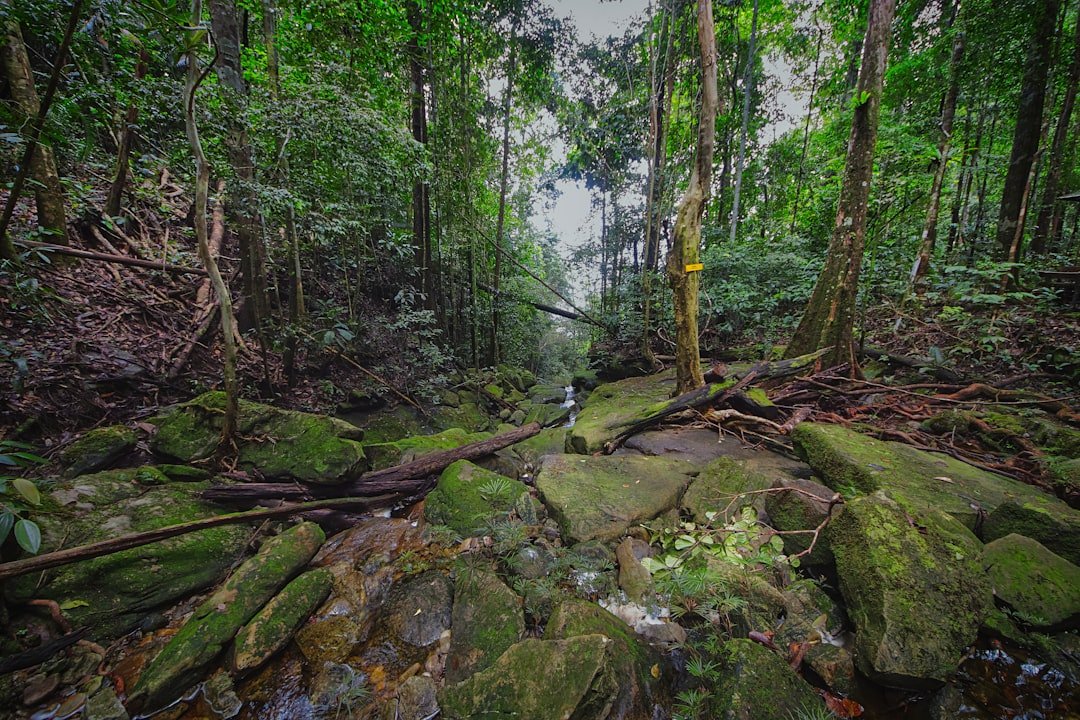
Wildlife Photography Breakthrough: Rediscovery of Elusive Black-Naped Pheasant-Pigeon
In a remarkable testament to the power of modern wildlife documentation technology, researchers have successfully captured the first photographic evidence of the black-naped pheasant-pigeon in over a century. This significant ornithological discovery was made possible through the strategic deployment of motion-triggered camera equipment on Fergusson Island in Papua New Guinea, marking a watershed moment for conservation efforts in the region.
The black-naped pheasant-pigeon, referred to as Auwo by indigenous communities on the island, had not been conclusively documented since 1882—a gap spanning 140 years. This extended absence from scientific records left researchers uncertain about the species’ continued survival in its native habitat. The successful rediscovery validates ongoing fieldwork initiatives and demonstrates the critical importance of combining traditional expedition methods with contemporary imaging technologies.
The Role of Remote Sensing Technology
The expedition team deployed motion-activated camera traps throughout select territories on Fergusson Island, a strategy that has revolutionized wildlife research across remote ecosystems. These autonomous imaging systems operate continuously without human presence, making them invaluable for documenting elusive ground-dwelling species that avoid direct human contact. The cameras triggered automatically upon detecting movement, capturing high-resolution images that provided unequivocal proof of the bird’s presence.
This technological approach represents a paradigm shift in avian documentation and biodiversity monitoring. Rather than relying solely on direct observation—a method frequently compromised by the species’ reclusive nature—researchers leveraged non-invasive sensor technology to achieve their breakthrough discovery. The captured imagery provides crucial baseline data for understanding population dynamics and habitat preferences.
A Discovery Against the Clock
The timing of this photographic documentation proved remarkably fortuitous. The research team successfully recorded the bird’s image merely 48 hours before the scheduled conclusion of their field expedition. Had the camera trap been positioned differently or the equipment deployed on an alternative timeline, this momentous discovery might have been postponed indefinitely. This narrow window underscores how conservation science often depends on meticulous planning, resource allocation, and considerable fieldwork dedication.
The timing also highlights the unpredictability inherent in wildlife research, particularly when documenting species with minimal contemporary documentation. Field expeditions targeting cryptic ground-foraging birds require patience, systematic methodology, and adaptive strategies to overcome the inherent challenges of working in remote tropical landscapes.
Conservation Implications
The rediscovery carries profound implications for conservation policy and biodiversity protection across Papua New Guinea. Establishing conclusive evidence that the species persists in the wild provides a foundation for developing targeted preservation strategies and habitat protection initiatives. The photographic confirmation enables scientists to reassess the bird’s conservation status and allocate resources accordingly.
This discovery exemplifies how modern camera technology continues to expand our understanding of planetary biodiversity. As climate pressures and habitat loss threaten countless species, innovations in remote sensing and autonomous documentation systems become increasingly vital tools for conservation professionals navigating an era of ecological uncertainty.
The successful documentation of the black-naped pheasant-pigeon reinforces a crucial principle: species long presumed lost to science may persist in inaccessible environments, awaiting rediscovery through innovative technological application and dedicated scientific inquiry.