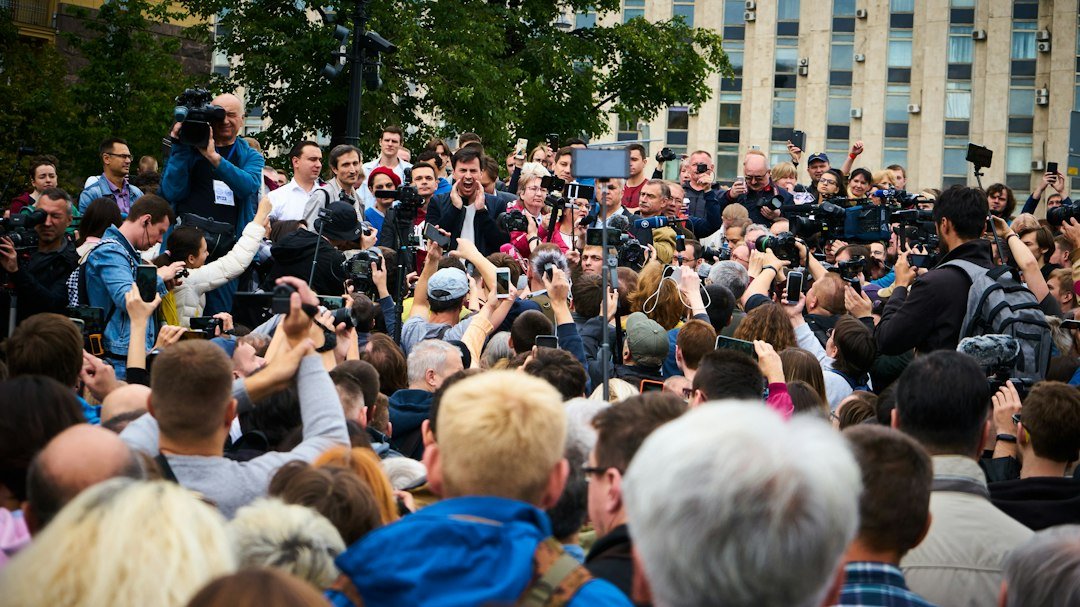
Three photographers have filed a lawsuit against the St. Paul Police Department in Minnesota. They allege that officers used chemical irritants, including tear gas and pepper spray, against them while they were covering an immigration enforcement operation by U.S. Immigration and Customs Enforcement (ICE). The plaintiffs are relying in part on their own photographs of the scene as evidence.
Documenting the Scene
For working photojournalists, a live operation like this is a high-stakes assignment. Crowds form quickly, officers move fast, and the line between observer and participant can blur in seconds. Press photographers typically work with a mix of wide-angle and telephoto lenses, carry identification, and try to keep a safe distance from the action. Their images often become the most reliable record of what happened when events turn chaotic, which is why the photographs themselves now sit at the center of this case.
Why the Images Matter
Photographs carry a unique kind of credibility in disputes like this one. Timestamped frames, EXIF metadata, and sequences shot from different angles can help establish where a photographer stood, what they were doing, and what was happening around them. In litigation involving force used during public events, visual records can either corroborate or contradict official accounts. Legal teams often treat original image files, rather than cropped social media versions, as the most valuable material, because they preserve the metadata needed to verify authenticity.
A Broader Press Freedom Question
Cases involving journalists and chemical agents have drawn national attention in recent years. Many press advocates argue that the First Amendment protects the right to record police activity in public, and that officers should not target reporters or photographers who are documenting the scene from a lawful vantage point. Police departments, for their part, generally maintain that crowd control measures are necessary when situations become unstable, and that individual incidents must be assessed on their specific facts.
Because this matter is now in the courts, the allegations remain just that: claims made by the plaintiffs that have not yet been tested or resolved. Still, the suit underscores a practical reality for the photography community. When a photographer’s own camera becomes the key witness, the ability to preserve unedited files and maintain a clear chain of custody can matter as much as the composition of the shot itself.
What Comes Next
Photographers, editors, and press unions will be watching how the court weighs the visual evidence. Regardless of the outcome, the case is likely to add to the ongoing conversation about how journalists can safely cover enforcement actions, and what protections they should expect when they are doing their jobs in public spaces.