Mastering Temporal Compositing for Dynamic Light Trail Photography
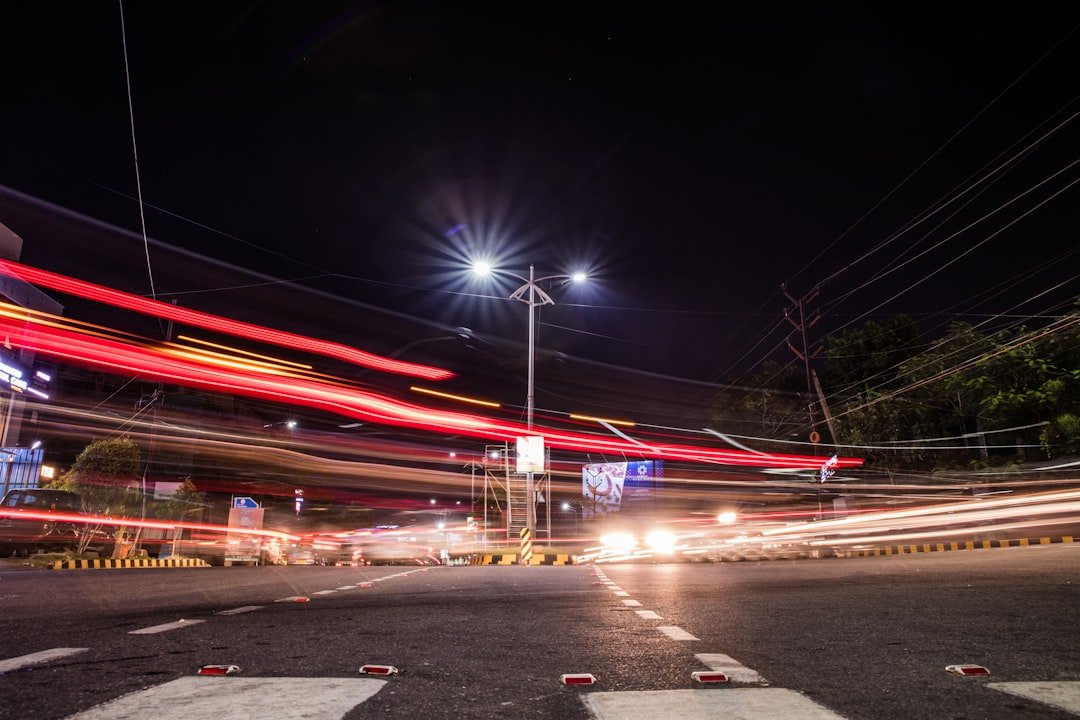
Photographing nocturnal traffic and urban environments presents distinctive technical challenges that demand sophisticated post-processing solutions. While traditional long-exposure methodology captures vehicle light trails in a single frame, this approach frequently yields suboptimal results characterized by inconsistent luminosity and fragmented streak patterns.
Time blending—also referred to as temporal compositing or exposure fusion—has emerged as a transformative technique that fundamentally redefines how photographers approach nighttime motion capture. Rather than relying on a solitary extended exposure, practitioners layer multiple shorter captures to construct seamlessly integrated light trail sequences.
Why Single-Frame Long Exposures Fall Short
Extended exposure times present inherent limitations. Camera sensors accumulate thermal noise during prolonged captures, degrading image fidelity. Additionally, a single extended exposure cannot selectively preserve optimal luminosity across vehicular streaks—some will appear overexposed while others remain underexposed within the same composition.
The temporal variability of traffic patterns creates another complication. Vehicle movement remains unpredictable; relying on one extended frame risks capturing incomplete or awkwardly positioned light trails that diminish compositional impact.
The Time Blending Advantage
By acquiring multiple shorter exposures—typically ranging from 4 to 15 seconds each—photographers gain granular control over the final visual narrative. This methodology allows practitioners to:
Optimize exposure consistency: Each sequential capture documents incremental vehicle movement, enabling post-acquisition selection and arrangement of the most aesthetically compelling segments. Photographers can discard problematic frames while retaining superior streaks.
Enhance signal-to-noise ratios: Shorter individual exposures generate less thermal noise compared to equivalent cumulative exposure duration achieved through single-frame methodology. Modern stacking software intelligently processes multiple frames, further suppressing artifacts.
Enable compositional flexibility: Capturing 5-10 sequential frames provides photographers with editorial control unattainable through single-exposure workflows. Sections featuring optimal light trail density, positioning, and luminosity distribution can be selectively blended.
Technical Implementation
The process begins with establishing a sturdy tripod configuration to ensure absolute frame-to-frame consistency. Photographers then systematically capture consecutive images under identical settings—fixed aperture, ISO, and white balance maintain uniformity throughout the series.
Dedicated software designed for exposure blending or HDR tone mapping facilitates the integration of sequential captures into cohesive final compositions. Advanced users employ Photoshop layer masking techniques or specialized applications like Luminance HDR and LrTimelapse for granular blending control.
Strategic Advantages in Professional Practice
Commercial and editorial photographers increasingly adopt temporal compositing for high-stakes nocturnal assignments where compositional perfection is non-negotiable. Real estate, automotive, and urban environment documentation particularly benefit from this refined approach.
The methodology transforms unpredictable environmental variables—traffic flow, pedestrian movement, atmospheric conditions—from liabilities into manageable elements. Photographers transition from passive observers hoping optimal moments align with shutter release to active directors curating ideal visual sequences from comprehensive capture libraries.
Time blending represents a philosophical and technical evolution in night photography. Rather than accepting singular-moment constraints, contemporary practitioners leverage digital imaging flexibility to construct intentional, dynamically energized compositions that surpass what instantaneous capture methodology permits.