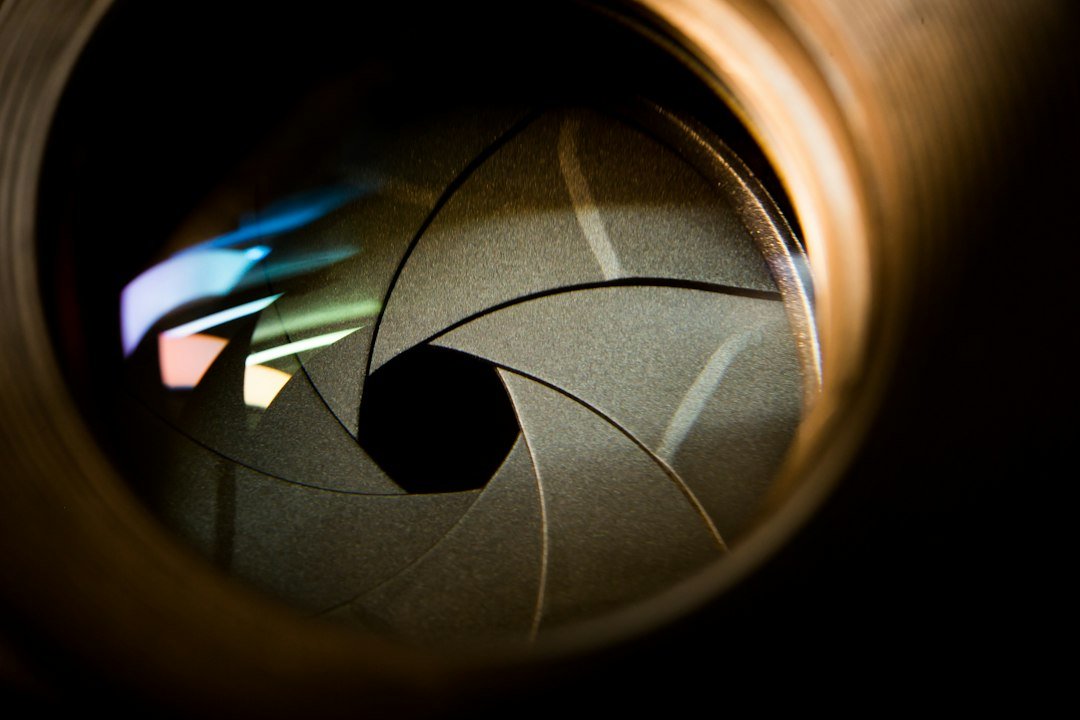
The Aperture Paradox: Why Focal Length Changes Everything
One of the most counterintuitive concepts in photography involves the relationship between aperture values and actual light-gathering ability. Consider this scenario: a 50mm lens set to f/4 possesses a mechanically larger aperture opening than an 18mm lens operating at f/1.8. Yet despite this physical reality, the 18mm lens is classified as having superior light-gathering capabilities. This apparent contradiction reveals fundamental principles about how aperture mechanics function when you transition between different focal lengths.
Decoding the F-Stop Scale
The f-number system represents a ratio rather than an absolute measurement. Specifically, it expresses the relationship between a lens’s focal length and the physical diameter of its entrance pupil—the effective aperture opening as seen from the front of the lens. This mathematical relationship means that the same f-number across different focal lengths produces dramatically different physical aperture sizes.
When you divide a focal length by its f-number, you obtain the actual diameter of the aperture opening. An 18mm lens at f/1.8 yields an aperture diameter of roughly 10mm, while a 50mm lens at f/4 produces an opening of approximately 12.5mm. Despite the 50mm configuration having the physically larger opening, it transmits less light relative to its field of view because the light gathering power is distributed across a narrower angle of view.
Light Distribution Across Field of View
The key to understanding this apparent contradiction lies in recognizing that aperture efficiency depends on how light is distributed across the image frame. A wider-angle lens at f/1.8 concentrates incoming light across a substantially broader field of view than a standard lens at f/4 concentrates light across its more limited perspective. From a photographic standpoint, the 18mm lens delivers more illumination per unit area in the resulting image, making it the superior performer in low-light conditions despite having a physically smaller aperture opening.
Practical Implications for Modern Photographers
Understanding this distinction carries significant implications for equipment selection and shooting technique. When evaluating lenses for specific assignments—particularly in challenging lighting environments—photographers must consider the effective light-transmitting capability rather than solely examining aperture diameter. Two lenses with identical f-number ratings may perform quite differently depending on their focal lengths and optical designs.
This principle also clarifies why ultra-wide lenses with f/4 apertures often outperform telephoto options with f/2.8 openings in dim settings, and why professional cinematographers carefully match aperture values to focal lengths when balancing exposure and depth-of-field across multiple camera angles.
Conclusion
Mastering aperture behavior across varying focal lengths elevates technical understanding and informs smarter equipment decisions. Rather than viewing f-stops as simple numbers, recognizing them as ratios that express light-gathering efficiency relative to magnification creates a more nuanced appreciation for lens performance and optical design principles that drive modern photography.