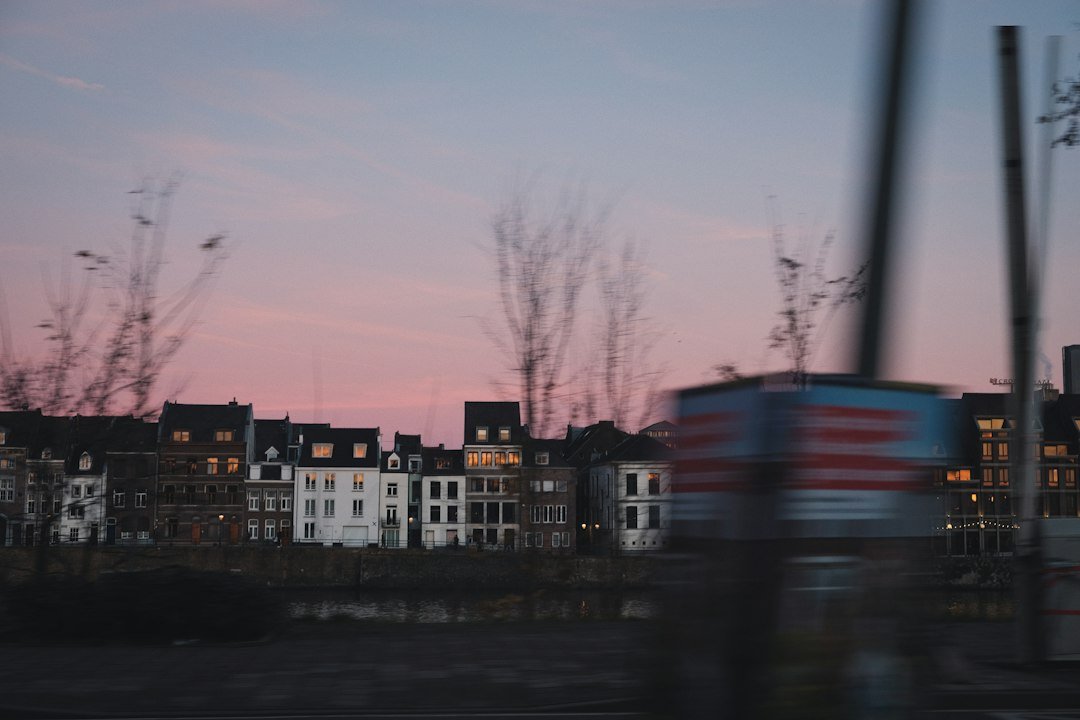
Smartphone sensors keep getting better, and that raises an obvious question for photographers: can a tiny chip in a phone really outperform a camera with a much larger sensor? To find out, we shot the iPhone 18 Pro alongside a larger-sensor camera using matched exposure settings, then looked at where any differences actually came from.
Why Pro Controls Changed the Test
With the iPhone 18 Pro, Apple added Pro controls to the stock Camera app, allowing users to set aperture, shutter speed, and white balance manually without a third-party app. ISO, however, remains automatic. In an earlier test, we found a trade-off: manually setting shutter speed bypasses the computational pipeline that normally stacks multiple frames to reduce noise and improve detail.
That behavior makes sense. If a photographer wants genuine manual control over exposure time, blending in frames captured at other shutter speeds would work against that goal. But it also raised a useful question. With frame stacking removed from the equation, how would an iPhone image compare with one from a camera whose sensor is physically larger? The answer would show whether the iPhone’s sensor is in a different league or whether it performs roughly as its size would predict.
The Setup
We chose the OM System OM-1, a Micro Four Thirds camera, as our comparison. Its 4:3 aspect ratio matches the iPhone’s, which made it easy to align framing precisely. The OM-1’s Four Thirds sensor offers about 3.15 times the surface area of the iPhone 18 Pro’s Type 1/1.28 main sensor. That gap translates to a 1.65-stop advantage in total light captured at the same aperture and shutter speed.
The iPhone was shot at F1.8. To collect the same total amount of light, the OM-1 had to be stopped down by the same 1.65 stops, landing at F3.2. Both cameras were framed at a 24mm equivalent focal length. On the iPhone, that is the native focal length of the main camera. On the OM-1, it meant a 12mm setting on a Panasonic 12-35mm F2.8 lens. Both were set to 1/60 second.
Because the two cameras shared the same physical aperture size, the same exposure time, and the same total light, the test was tightly controlled. The one variable that could not be fixed manually was ISO. The iPhone selected ISO 1250 automatically. The OM-1 needed ISO 4000, since its larger sensor spreads the same light across a bigger area and requires more gain to reach the same image brightness.
Full Settings at a Glance
iPhone 18 Pro: 24mm equivalent, F1.8, 1/60 sec, ISO 1250 (auto), ProRaw
OM-1: 24mm equivalent, F3.2, 1/60 sec, ISO 4000, Raw
Where Could the Differences Come From?
Since both cameras captured the same amount of light, any meaningful difference in noise, viewed at the same output size, must originate in one of two places: the sensors themselves or the processing applied to the files. That is the heart of the experiment. We shot a twilight scene with both cameras and processed the Raw files in Adobe Lightroom Classic, which relies on the same engine as Adobe Camera Raw. We adjusted the OM-1 file’s white balance and brightness to closely match the iPhone image before exporting both as high-quality JPEGs.
The early results point toward a clear conclusion. Differences in the output appear to depend heavily on how Apple’s processing handles the image, rather than on the iPhone’s sensor outpacing a larger one. For photographers weighing a phone against a dedicated camera, the lesson is that sensor size still sets the baseline for light gathering, and software determines much of what happens next.